
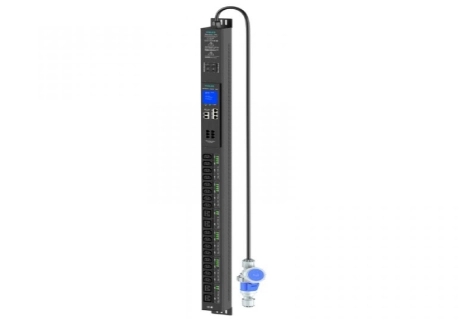
Artificial intelligence is changing how data centers consume and distribute electricity. AI racks combine dense processors, high-speed network devices, storage systems, and cooling controls within limited space. Their power demand is much higher than that of many traditional server racks, and it can change sharply as workloads move between training, inference, and idle periods.
This shift puts new pressure on the power distribution unit. A PDU that works for conventional servers may lack the capacity, monitoring details, or alarm functions required by an AI cluster. Data center teams must therefore ask an important question: Is the current PDU ready for rising rack power, or has it become a hidden limit on future growth?
Why AI Rack Power Creates New Risks
The expansion of AI computing is increasing both total electricity use and power concentration at rack level. An international Energy and AI analysis forecasts strong growth in data center demand through 2030. For facility teams, however, the immediate concern is how safely electricity reaches each rack.
Higher rack loads can create several risks:
- Branch circuits may approach their limits sooner.
- Connectors and cables may operate at higher temperatures.
- Poor phase balance may leave useful capacity unavailable.
- Fast power changes may trigger alarms or breakers.
- Manual inspections may miss short load peaks.
- New equipment may exceed the original electrical design.
A cabinet can still have open rack units but lack enough electrical or cooling capacity for another server. This stranded space reduces flexibility and may force expensive changes to power infrastructure.
Warning Signs That Your PDU Is Not Ready
A PDU does not need to fail completely to become unsuitable. Repeated alerts, hot connections, unexplained breaker trips, and missing power records can all indicate that a rack is reaching its design limits.
Operators should identify whether the problem comes from the PDU, upstream circuit, cable, panel, or connected equipment. Several warning signs deserve immediate attention.
The Rack Regularly Approaches Its Limit
A rack operating close to its circuit rating has little room for workload peaks or new hardware. Average readings may look acceptable while hiding short periods of much higher demand.
Review maximum current and power records instead of relying only on present values. The PDU, branch circuits, plugs, conductors, and protective devices must all support the intended continuous load. Capacity planning should include:
- Current maximum demand
- Short power peaks
- Planned server additions
- Rack-level cooling equipment
- Redundant A and B feeds
- Required circuit headroom
Local electrical rules may also limit continuous use to less than the circuit’s full rating. A qualified electrical professional should review the final design.
Breakers Trip Without a Clear Cause
Repeated breaker trips may result from overload, phase imbalance, faulty equipment, or unsuitable protection. Resetting the breaker restores power but does not remove the underlying problem.
A smart PDU for AI data centers should provide warnings before a branch reaches a critical level. Branch-level readings show which outlet group is carrying too much load, while event records help engineers connect a trip with a particular workload or equipment change.
Operators Cannot See Phase Imbalance
Three-phase power is common in high-density racks because it can carry greater loads without requiring an excessive number of feeder cables. However, the equipment must be distributed correctly across all three phases.
One phase may approach its limit while the other two still have available capacity. A suitable three-phase PDU should display current by phase and provide remote alarms when an imbalance or high-load condition occurs.
What an AI-Ready PDU Should Provide
An AI-ready PDU is not defined by one advanced feature. It must match the rack’s electrical demand, network rules, physical layout, cooling design, and maintenance process. A highly intelligent product can still be unsuitable if it has the wrong input plug, outlet arrangement, mounting direction, or communication method.
The following capabilities have the greatest effect on rack safety and daily management.
Suitable Electrical Capacity
Start with voltage, frequency, phase, current, plug type, and upstream circuit rating. Then calculate the expected rack load and allow practical room for future growth.
A high-power or three-phase PDU may be more suitable for dense AI racks than a standard single-phase model. However, installing a higher-rated PDU does not add usable capacity if the upstream branch circuit cannot support it.
The complete power path should be reviewed:
- Upstream panel and breaker
- Branch circuit and conductors
- PDU input plug and cable
- Internal protected branches
- Outlets and equipment cords
- Server power supplies
The component with the lowest rating may become the true capacity limit.
Metering at the Right Level
Different facilities need different measurement detail. Input-level metering shows total rack demand. Branch monitoring identifies which protected outlet group is approaching its limit. Outlet-level monitoring connects energy use to a specific server or device.
A metered PDU can provide clear local readings for installation and capacity checks. Large facilities, remote sites, and frequently changing AI clusters may need networked monitoring, alarms, and longer data records.
Choose measurement points according to the decisions operators need to make. More data is useful only when teams can review it and take action.
Practical Alarms and Remote Access
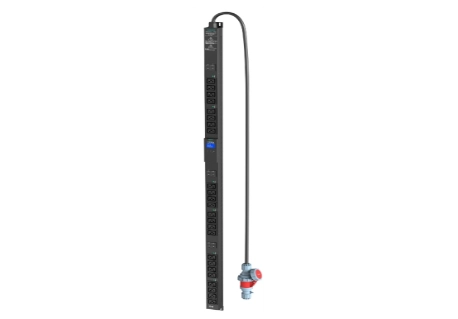
Remote PDU power monitoring allows staff to review current, voltage, power, energy use, and phase balance without visiting every rack. It also helps operators detect fast changes that may be missed during manual inspections.
Useful functions may include:
- Secure web access
- SNMP communication
- Configurable current thresholds
- Email or platform alerts
- User permissions
- Energy and event records
- Optional temperature or humidity sensors
Alarm limits should provide enough time to respond before a breaker trip. Limits set too low may produce repeated warnings and lead to alarm fatigue.
A smart managed PDU may also provide outlet-level control. Remote switching can help authorized teams restart equipment, but user roles, outlet labels, confirmation steps, and event logs are important. An incorrect command could interrupt a critical workload.
Consider Heat, Cooling, and Physical Fit
Higher electrical loads can increase temperatures around cables, connectors, outlets, and server power supplies. Even when current remains below a protective limit, a poor connection or blocked airflow may create a local hot spot.
Liquid-cooled AI racks introduce additional layout concerns. Pipes, manifolds, sensors, and coolant distribution equipment compete for rack space. The PDU should not block cooling components or sit where a possible leak creates unnecessary electrical risk.
Check these details before ordering:
- Zero-U or horizontal mounting
- PDU length and rack compatibility
- Outlet direction and spacing
- Cable entry point and bend radius
- Breaker and display access
- Separation from coolant lines
- Operating temperature range
- Outlet retention features
A high-density rack PDU should support clean cable routing and easy maintenance. Poor placement can restrict airflow, block server removal, or make inspections difficult.
Preserve Real A/B Power Redundancy
Many AI servers contain two power supplies connected to separate A and B power paths. This arrangement can keep equipment running when one path fails, but only if the paths remain electrically independent.
Connecting two PDUs to the same upstream breaker, panel, or source creates false redundancy. One fault may still remove both feeds. Operators should trace each path from the facility source to the server inlet and document any shared component.
Each path may also need enough capacity to carry additional load during a failure or maintenance event. A design that works during normal operation can become overloaded when one source is lost.
How KAILES Supports High-Density Projects
At KAILES, we provide a broad PDU product range covering basic power distribution, metering, remote monitoring, intelligent management, and high-power applications. Our products serve data centers and other environments where stable rack-level power is important.
Through our pre-sale service, we can review voltage, current, outlet, communication, mounting, protection, and future capacity requirements before production. This helps customers choose products according to operating conditions rather than relying only on a standard model number.
After delivery, our after-sale service provides support for product use, maintenance, and technical questions. We consider the PDU part of the complete power path, not an isolated rack accessory.
PDU Procurement Checklist
Before ordering a PDU for an AI rack, confirm:
- Input voltage, phase, plug, and current
- Maximum continuous load and expected peaks
- Required future capacity
- Outlet types, quantities, and retention features
- Input, branch, or outlet-level monitoring
- Network protocols and security controls
- Required alarms and environmental sensors
- A/B power path independence
- Rack dimensions and cooling equipment
- Certification, warranty, and support requirements
Ask suppliers to state all technical assumptions in their proposals. A detailed response is easier to compare and less likely to hide an electrical or physical mismatch.
Conclusion
Rising AI rack power can turn an ordinary PDU into a serious capacity and reliability limit. Data center teams should review the complete electrical path before installing dense computing equipment. Current, phase balance, branch loading, temperature, physical fit, monitoring coverage, and A/B redundancy all require attention.
An AI-ready PDU offers more than additional outlets. It provides suitable capacity, timely power data, practical alarms, and better control over rack-level risk. Begin with measured demand, account for peaks and future growth, and select monitoring functions that support real operating decisions. Careful planning can reduce breaker trips, hidden hot spots, stranded rack space, and disruptive replacement work as AI infrastructure continues to expand.
FAQs
Q: What is a smart PDU for AI data centers?
A: It distributes rack power while providing metering, alarms, remote monitoring, and optional outlet control.
Q: When should a data center replace its PDU?
A: Replace it when capacity, monitoring, outlets, or communication functions no longer meet rack requirements.
Q: Is a three-phase PDU suitable for AI racks?
A: Yes. It supports higher loads, but operators must monitor and balance all three phases.

