
AI data centers are changing the role of rack power distribution. A PDU is no longer judged only by its outlet count or purchase price. It must support higher rack loads, more demanding operating conditions, clearer energy data, and future equipment upgrades.
The pressure is growing across the entire electrical system. The International Energy Agency’s 2026 analysis projects that global data center electricity consumption could rise from about 485 TWh in 2025 to around 950 TWh in 2030.For data center owners, EPC teams, electrical engineers, and procurement managers, the key question is simple: will the selected PDU remain suitable after the facility adds more AI servers?
Why Is AI Rack Power Creating New PDU Risks?
The move toward AI computing affects more than total electricity consumption. It changes the way power is concentrated inside cabinets, how loads fluctuate, and how quickly a facility may need to expand. A PDU that works for a conventional rack may become a limitation in a high-density environment.
Before placing an order, buyers should look beyond the catalog name. The real issue is whether the PDU matches the complete power path, from the upstream distribution equipment to the final server connection.
Higher Loads Need More Than a Larger Current Rating
AI cabinets may require substantially more power than standard IT racks. However, selecting a higher-current model alone does not solve every problem. The input configuration, outlet type, cable arrangement, branch protection, and cabinet space must also work together.
A procurement review should confirm:
Input voltage and frequency
Single-phase or three-phase power
Rated current and continuous operating current
Expected average load and peak load
Outlet quantity and outlet type
C13 or C19 requirements
Plug, cable, and connector specifications
Vertical or horizontal installation
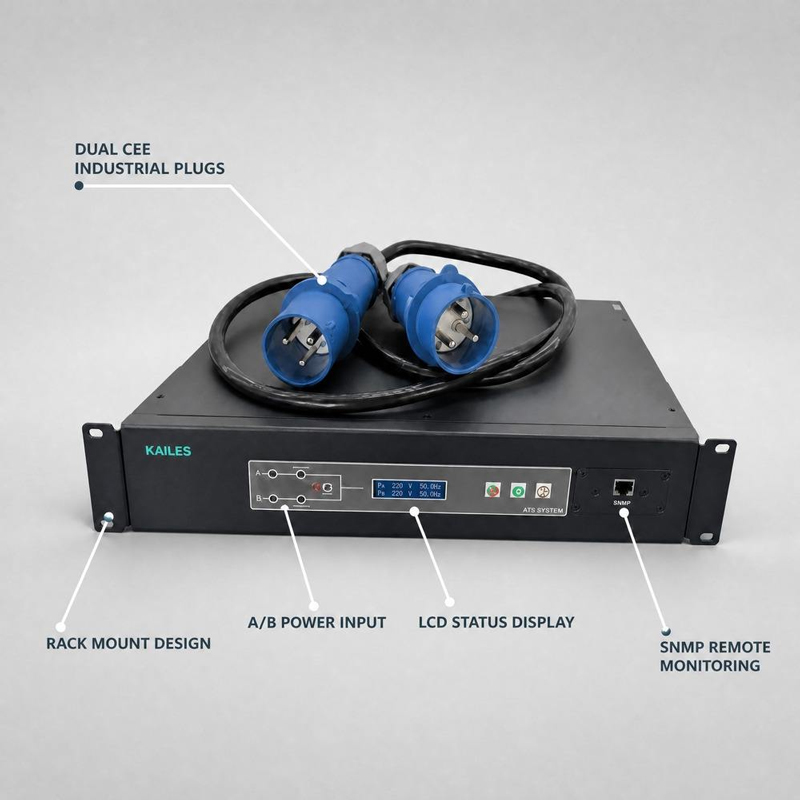
A and B power feed requirements
Available space inside the rack
A high density PDU must be designed around the actual rack load. If a project team chooses a model by current rating alone, it may later face cable congestion, poor airflow, unbalanced loading, or difficult maintenance.
Peak Demand Can Matter More Than Average Demand
Average power data often looks safe during the design stage. Yet AI workloads can create sharp changes in demand. The PDU, upstream branch circuit, and monitoring system must be able to handle these changes without creating nuisance alarms or unexpected trips.
This matters especially when a facility plans phased deployment. The first group of cabinets may operate below the rated capacity, while a later server upgrade pushes the same power path much closer to its limit.
What Should Be Written Into the RFQ?
A vague RFQ creates vague quotations. When suppliers receive only a product name and a quantity, they may make different assumptions about current, outlets, monitoring, cable length, or installation. The result is a price comparison that looks clear but is technically unreliable.
A strong RFQ gives the supplier enough information to check the design before production begins.
Electrical Details Must Be Specific
A project RFQ should include the following information:
Facility location and market requirements
Required certification or inspection documents
Input voltage, phase, and frequency
Rated current and expected load
Number of power feeds
Required protection devices
Outlet type and spacing
Cable length and exit position
Communication protocol
Display and alarm requirements
Quantity by PDU model
Required delivery date
For projects in the United States, the customer may also need documentation related to UL requirements, installation conditions, circuit protection, and the system’s short-circuit rating. These requirements should be clarified before the quotation is finalized.
PDU selection also needs to fit the wider power project distribution plan. The rack-level unit may be small, but its specification is connected to the UPS, switchboard, panelboard, and branch circuits.
Mechanical Details Are Easy to Miss
Mechanical compatibility is often discovered too late. A PDU can meet the electrical requirements and still create problems during installation if its body length, mounting brackets, cable exit, or display position is unsuitable.
The RFQ should state:
Rack height and available mounting space
PDU body dimensions
Mounting orientation
Cable routing direction
Required bend radius
Airflow limitations
Service access requirements
Weight restrictions
Labeling and identification needs
This information is particularly important for retrofit projects. Existing cabinets may not have the same depth, cable path, or clearance as new cabinets.
Does Every AI Data Center Need a Smart PDU?
Not every cabinet requires the same level of intelligence. However, as rack density rises, monitoring becomes more valuable. Without reliable data, facility teams may not know which cabinets are close to their limits or where capacity remains available.
The right question is not whether smart functions sound advanced. It is whether they solve a real operating problem.
What Monitoring Can Add to a Project
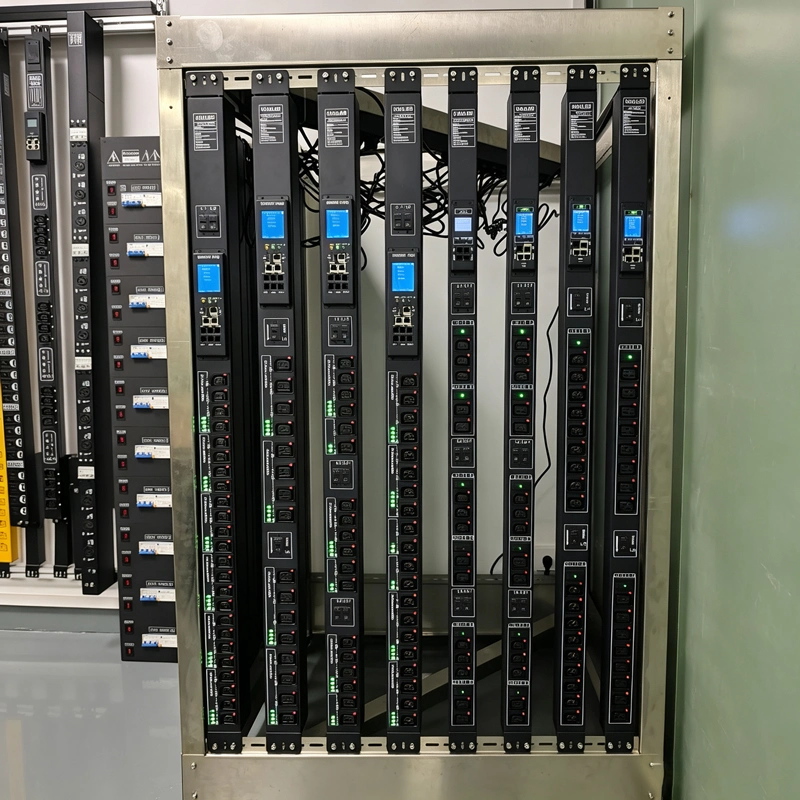
A monitored or smart PDU can provide information such as:
Input voltage
Current by phase
Total power
Energy consumption
Outlet-level load
Temperature and humidity
Overload alarms
Remote access
Communication status
Historical load trends
These functions support daily operation and future planning. For example, a facility manager may use load data to decide whether a cabinet can accept another server. An engineer may review phase imbalance before it becomes a larger issue. A maintenance team may check alarms remotely before entering the data hall.
As a smart PDU manufacturer, KAILES provides products that support remote monitoring, measurement, communication, and intelligent control. We design the solution around the customer’s electrical requirements and management process.
Monitoring Must Match the Customer’s System
A smart feature is useful only when the site team can use the data. Before purchasing, confirm:
Which communication protocol is supported
How alarms are displayed
Whether remote access is available
How data is stored
Whether the PDU can connect with the existing management platform
How firmware or configuration updates are handled
A buyer should also confirm whether monitoring is required at the input, branch, or outlet level. These functions affect both price and engineering scope.
When Is a High-Power PDU the Better Fit?
A standard PDU may be suitable for ordinary cabinet loads, but higher-density applications need a closer review of current, heat, outlets, and cable management. A high-power unit may be a better fit when the rack load is increasing or when several high-consumption devices share one cabinet.
Capacity Should Include Room for Expansion
It is risky to specify a PDU that only meets the first-stage load. The better approach is to review the planned operating range and expansion schedule.
Procurement teams should ask:
What is the expected load on day one?
What load is expected after the next server upgrade?
Is the upstream circuit large enough for the planned growth?
Can the PDU operate safely under continuous load?
Will future equipment require more C19 outlets?
Can the cabinet maintain acceptable airflow after installation?
KAILES high-power PDU solutions can support demanding applications with higher-current configurations and C19 outlet options. These products are intended for projects where rack power, equipment density, and future expansion must be considered together.
The final specification should still be confirmed against the site’s electrical design. A high-power PDU is not a substitute for correct upstream protection or load calculation.
How Should Buyers Evaluate PDU Suppliers?
The lowest quotation does not always represent the lowest project cost. A supplier that cannot provide drawings, testing records, customization support, or timely technical answers may create expensive delays later.
A professional review should examine both the product and the manufacturer behind it.
Review Technical and Production Capability
When comparing PDU suppliers, ask for:
Product datasheets
Wiring diagrams
Installation drawings
Load schedules
Test procedures
Certification documents
Sample labels
Packaging information
Delivery schedule
Spare-parts plan
Warranty terms
A data center PDU manufacturer should also explain how it handles design changes. This is important for projects with different rack types, multiple power paths, or changing equipment lists.
Customers looking for a power distribution equipment factory should pay attention to production experience, testing equipment, quality controls, and communication during the design stage. These details often show whether the supplier can support a real project rather than only sell a standard product.
Customization Can Reduce Rework
Customization may involve more than changing the enclosure. It can include:
Input plug and cable changes
Outlet layout
Current rating
Circuit breaker arrangement
Metering functions
Communication modules
Temperature and humidity sensors
Label format
Mounting brackets
Special colors or dimensions
In a large facility, the PDU may need to coordinate with industrial power control, panelboards, switchboards, and control cabinets. KAILES supports customized power solutions for data centers, industrial applications, and other demanding environments. Our Product Center includes Basic PDU, Smart PDU, STS PDU, switchboard, panel board, and control cabinet solutions.
For a wider electrical project, customers may also require custom switchboards for data centers. Discussing the PDU and upstream distribution equipment at the same time helps reduce mismatched ratings, inconsistent labeling, and installation changes.
What Support Is Needed After the Purchase?
The project does not end when the equipment leaves the factory. Installation questions, wiring checks, communication settings, and replacement needs can affect the final schedule.
At KAILES, we provide pre-sales technical support covering application review, customized recommendations, electrical drawings, and project communication. This gives customers a clearer basis for comparing products and confirming the final specification.
After delivery, our after-sales service supports installation questions, technical consultation, spare parts, maintenance guidance, and problem response. This is valuable for overseas projects where a delayed answer can affect commissioning.
A supplier’s support process should be part of the procurement decision. It has a direct effect on project risk, especially when the PDU is connected to a critical data center or industrial system.
Conclusion
AI data centers are putting more pressure on rack-level power distribution. The right AI data center PDU must match the rack load, power path, outlet arrangement, monitoring needs, installation space, and expansion plan. Buyers should review more than current ratings and unit prices. They should also check documentation, certifications, testing, customization, delivery, and after-sales support. A high density PDU may be suitable for demanding cabinets, while a smart PDU can improve visibility and capacity planning. By working with an experienced data center pdu manufacturer, EPC teams and facility owners can reduce rework, avoid mismatched specifications, and build a power system that remains practical as AI workloads continue to grow.
FAQs
Q: What is an AI data center PDU?
A: It distributes and monitors power for high-density AI server racks.
Q: When is a high density PDU needed?
A: It is needed when rack loads exceed standard PDU capacity.
Q: What should PDU suppliers provide?
A: They should provide ratings, drawings, testing documents, delivery details, and technical support.

