
A switchboard, panelboard, or control cabinet may look acceptable on a quotation sheet and still create problems during engineering review, inspection, installation, or commissioning.
This risk is increasing as U.S. factories expand, data centers add high-density loads, and industrial automation becomes more complex. A project may require a 2000A switchboard, a branch panelboard with a specific AIC rating, or a control cabinet designed around a detailed PLC and machine sequence. A general catalog model may not fit the actual project.
For buyers searching for low-voltage switchboards in the USA, the key question is not simply whether the equipment can carry power. The more important question is whether the equipment matches the project’s standards, fault level, installation conditions, control logic, and future expansion plan.
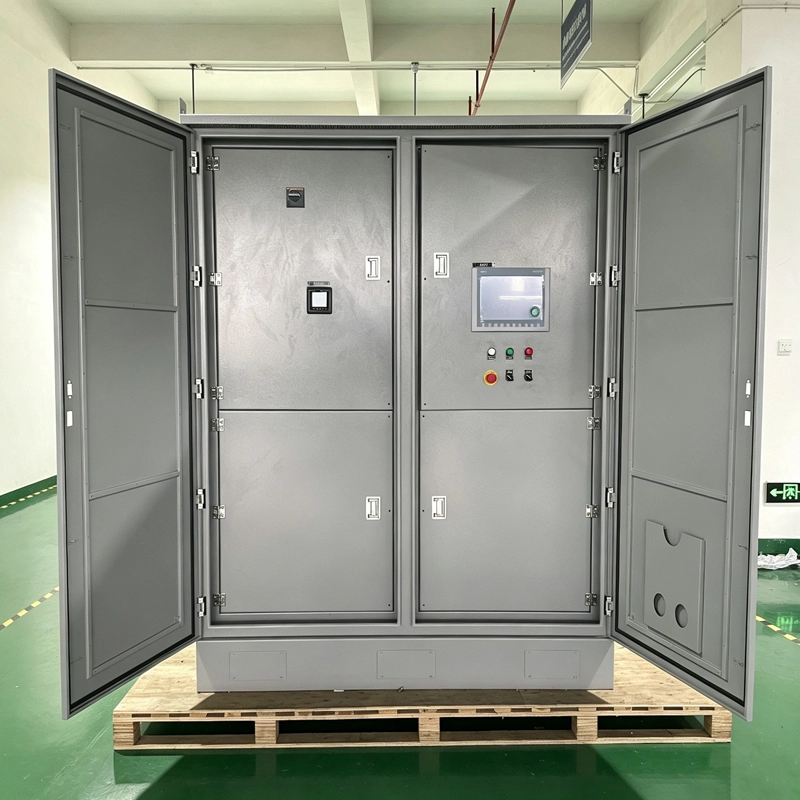
Why Are Standard Ratings Creating New Project Risks?
Electrical equipment is often ordered after the main design has already been discussed. That timing can create confusion. Different project members may use the same words while referring to different requirements. A breaker rating, assembly rating, AIC value, and SCCR marking do not always mean the same thing.
As a result, procurement teams need a clear technical boundary before comparing suppliers or approving a quotation.
AI Data Centers and Factories Are Raising the Load
The pressure is visible in both data centers and industrial facilities. AI computing increases rack density, while factories are adding automated equipment, motors, chargers, cooling systems, and production lines. In the United States, data center electricity demand is expected to become a much larger part of total power use by the end of this decade.
This affects several purchasing decisions:
Higher incoming current may be required.
More feeder sections may be needed.
Short-circuit levels may exceed older equipment ratings.
Spare capacity becomes important for the next expansion stage.
Monitoring and communication may be needed at several points.
The enclosure must fit the actual installation environment.
A 2000A switchboard designed for a stable load may not be suitable for a facility that will add new production lines next year. The same issue applies to data centers. A panelboard with enough circuits today may have no practical space for future cabinet rows.
The Equipment Category Must Match the Job
The first mistake in many RFQs is using the wrong equipment category.
A switchboard normally supports larger-scale power distribution. A panelboard commonly manages branch circuits. A control cabinet manages equipment operation, signals, protection, and automation logic. A PDU serves rack-level distribution and monitoring.
These systems may be connected, but they should not be specified as if they were interchangeable. A supplier needs to know whether the project requires:
Main distribution from a transformer or service entrance
Branch circuit distribution
Machine control and automation
Server rack power distribution
Dual power switching
Environmental or energy monitoring
This distinction helps the buyer avoid receiving a low-cost quotation that does not meet the intended application.
What Should U.S. Buyers Confirm Before Requesting a Quote?
A strong RFQ gives suppliers enough information to review the design instead of guessing. It also allows the buyer to compare quotations on the same technical basis.
For U.S. projects, standards and markings should be discussed at the beginning. UL 891 is associated with switchboards, UL 67 applies to panelboards, and UL 508A covers industrial control panels. The exact standard and certification path still depend on the equipment design and application.
Prepare the Electrical Data
The RFQ should include the following information whenever possible:
System voltage and frequency
Single-phase or three-phase supply
Main and feeder current
Available fault current
Required SCCR
Breaker interrupting rating or AIC requirement
Busbar material and size
Neutral and grounding arrangement
Cable entry direction
Indoor or outdoor installation
NEMA enclosure requirement
Metering and communication functions
Spare circuit or future expansion requirements
For a panelboard, the buyer should not provide only the number of circuits. The project team should also identify the available fault current, main disconnect requirement, enclosure location, wire bending space, and required AIC rating.
The SCCR and AIC ratings should be reviewed together with the complete assembly and protective devices. A label that appears impressive cannot compensate for an incomplete fault-current review.
Provide the Mechanical and Site Conditions
Electrical drawings are only part of the quotation package. Physical conditions can affect cost, delivery, and installation.
The supplier should receive information about:
Available floor or wall space
Front-access or rear-access requirements
Working clearance
Seismic or environmental conditions
Cable routing
Door opening direction
Ventilation and heat dissipation
Lifting and transportation limits
Required maintenance access
For data centers, rack rows and electrical rooms may follow strict layout rules. For industrial sites, dust, moisture, vibration, and temperature may affect the enclosure choice. A project may also require a control cabinet beside a machine, a distribution panel in a production area, and a main switchboard in a dedicated electrical room.
Could Compliance Problems Begin With the Label?
A rating label is important, but it should not be treated as the entire compliance review. The label must correspond with the design documents, component arrangement, protection system, and installation conditions.
This is especially important when an overseas manufacturer is supplying equipment for a U.S. project. The buyer should request drawings, certification information, test records, and a clear explanation of what the certification covers.
Check the Switchboard Basis
For a switchboard, the technical review may include:
Applicable UL 891 requirements
Rated voltage and continuous current
Main bus and feeder bus arrangement
Short-circuit withstand capability
Dead-front construction
Main and feeder breaker layout
Metering and surge protection
NEMA enclosure type
Working-space requirements
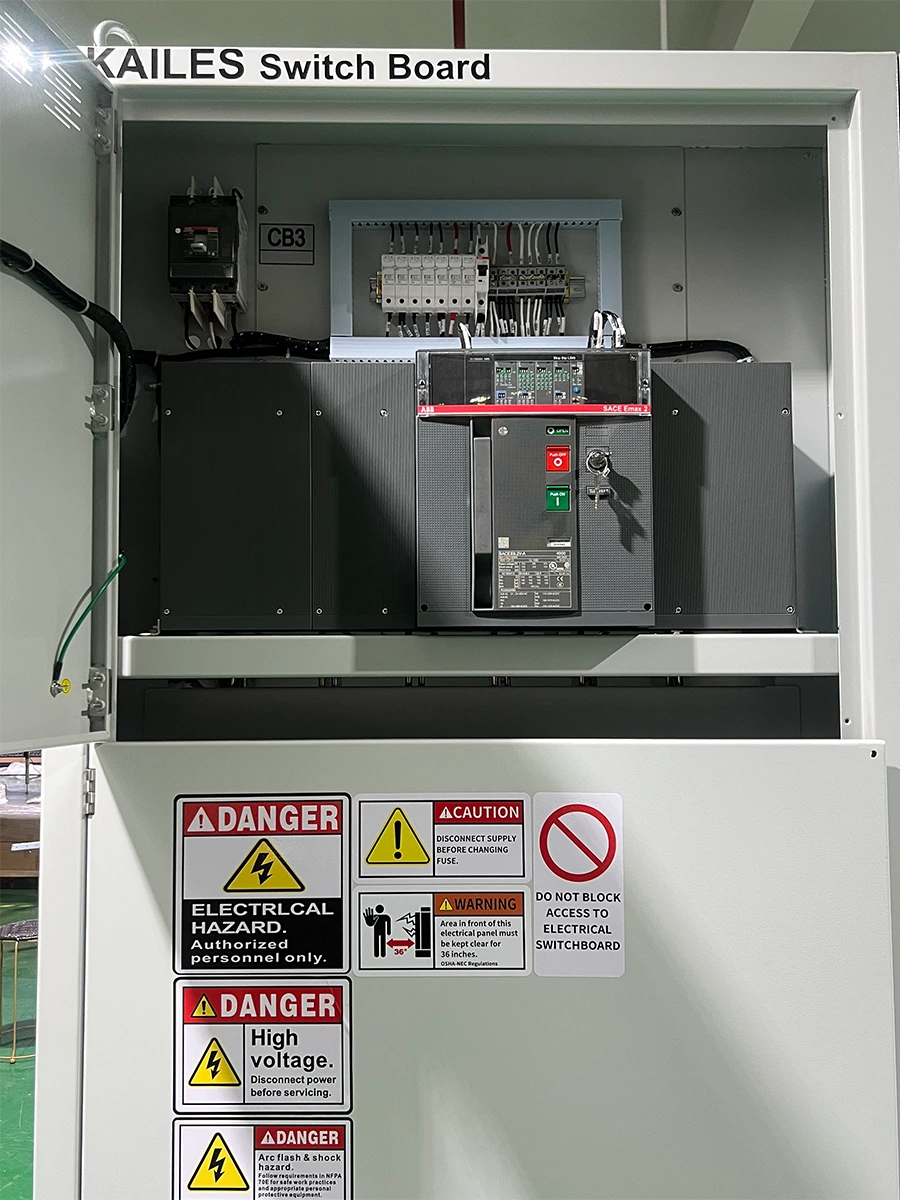
The KAILES switchboard solution supports high-current distribution applications and can be configured around project voltage, current, enclosure, access, cable entry, and monitoring requirements.
A switchboard should be reviewed as a complete assembly. The buyer should not approve it only because the main breaker has the requested ampere rating.
Check the Panelboard and Control Cabinet Basis
A panelboard review should focus on branch distribution, circuit quantity, protection, available fault current, and future spare capacity. The basic question is whether the panelboard can safely serve the connected circuits under the actual installation conditions.
A control cabinet requires another level of review. Under UL 508A, the panel manufacturer must consider the assembly’s components, wiring, overcurrent protection, and SCCR method. NEC Article 409 also requires industrial control panels to be marked with an SCCR.
A control cabinet specification may need to include:
PLC and HMI arrangement
Drive and motor control requirements
Safety circuits
Terminal layout
Communication ports
Heat management
Door-mounted devices
Wiring identification
Machine sequence and interlocks
Our KAILES control cabinet solutions are designed for industrial automation, production lines, machinery, and smart factory applications.
When Does Custom Design Become the Safer Option?
Customization is not always about adding unnecessary features. In many projects, it prevents the buyer from forcing a standard product into a non-standard application.
A custom design may involve the enclosure, busbar, breaker layout, cable entry, monitoring system, mounting method, or internal control arrangement.
Data Centers Need Coordinated Distribution
A data center may require a main switchboard, distribution panel, STS system, PDU, and monitoring platform. If these parts are purchased from different sources without technical coordination, installation and commissioning may become more difficult.
Projects requiring custom switchboards for data centers should review:
Main and backup power paths
Feeder arrangement
Space for future racks
Coordination with UPS output
Power monitoring
Cable access
Maintenance clearance
Connection with rack-level PDU systems
The same supplier does not have to provide every item, but the equipment boundaries must be clear. A supplier acting as a smart PDU manufacturer should also understand how rack-level distribution connects with the wider power system.
Industrial Control Requires More Than an Empty Enclosure
An industrial control cabinet is not simply a metal box with components installed inside. The cabinet must reflect the machine’s working sequence, safety requirements, heat load, and service needs.
For industrial power control, a buyer should ask for:
Electrical schematics
Component list
PLC I/O list
Control sequence
Terminal plan
Internal temperature review
Factory testing procedure
Revision control
Spare component plan
This matters in power distribution projects, factory expansion, EV facilities, automated warehouses, and microgrid projects. Custom data center switchboards and control panels may also require the same level of coordination when power distribution and control systems are closely connected.
What Should a Capable Manufacturer Provide?
A power distribution equipment factory should support the project before production begins. A product page and a price are not enough for a complex U.S. installation.
The supplier should be able to explain what information is needed, identify missing data, confirm the certification path, and provide drawings for review.
Look for a Complete Pre-Sales Process
Before placing an order, ask whether the supplier can provide:
Technical consultation
Single-line diagram review
Load schedule review
Preliminary layout
Custom configuration
Certification documents
Test plan
Factory acceptance test
Delivery schedule
Change management
At KAILES, we support switchboards, panelboards, control cabinets, PDUs, and related power distribution equipment. Our pre-sales service helps customers review project requirements before production, including voltage, current, enclosure, layout, monitoring, and installation conditions.
Delivery and After-Sale Support Matter
A technically correct product can still create project problems if the supplier cannot support delivery, installation, or service.
The buyer should confirm:
Production lead time
Drawing approval process
Packaging method
Spare parts availability
Remote technical support
Warranty terms
Replacement procedure
Installation guidance
Our after-sales service supports customers after delivery with technical assistance, maintenance guidance, and follow-up service.
Conclusion
For U.S. industrial and data center projects, the wrong switchboard, panelboard, or control cabinet rating can cause more than a technical correction. It may lead to redesign, inspection delays, installation changes, or a missed delivery target. Buyers should confirm the equipment category, applicable standard, fault-current data, SCCR and AIC requirements, enclosure conditions, control logic, and future expansion needs before requesting a quotation. Whether the project involves low-voltage switchboards in the USA, custom switchboards for data centers, industrial power control, or power distribution projects, early engineering communication makes the purchasing decision clearer. KAILES can support customers with project-based design, customized production, testing, and service for connected power distribution systems.
FAQs
Q: Which standard usually applies to U.S. switchboards?
A: UL 891 is commonly used for dead-front switchboard assemblies.
Q: Are SCCR and AIC ratings the same?
A: No. They apply to different equipment and must be reviewed within the complete electrical design.
Q: Can KAILES build custom control cabinets?
A: Yes. KAILES provides customized control cabinets, switchboards, panelboards, and PDU solutions.

