Smart PDU
Professional OEM/ODM Customization Solutions

Smart PDU

share

Facebook
Twitter
LinkedIn
Product Introduction

The switchboard is a core equipment in power systems for centralized distribution, control, and protection of electrical energy. It is widely used in industrial plants, commercial buildings, residential complexes, data centers, public facilities, and other scenarios.It adopts premium composite galvanized plates and stainless steel materials. Internally, it integrates circuit breakers, contactors, fuse protection devices, and supports multi-circuit power distribution. It possesses multiple protection functions such as overload, short circuit, temperature rise, and leakage current protection, ensuring power system safety.With remote operation and a modular structure design, it facilitates expansion and maintenance, meeting different users’ diversified power management requirements.

Product Features
Real-Time Power Monitoring – Clear Visibility of Electrical Loads
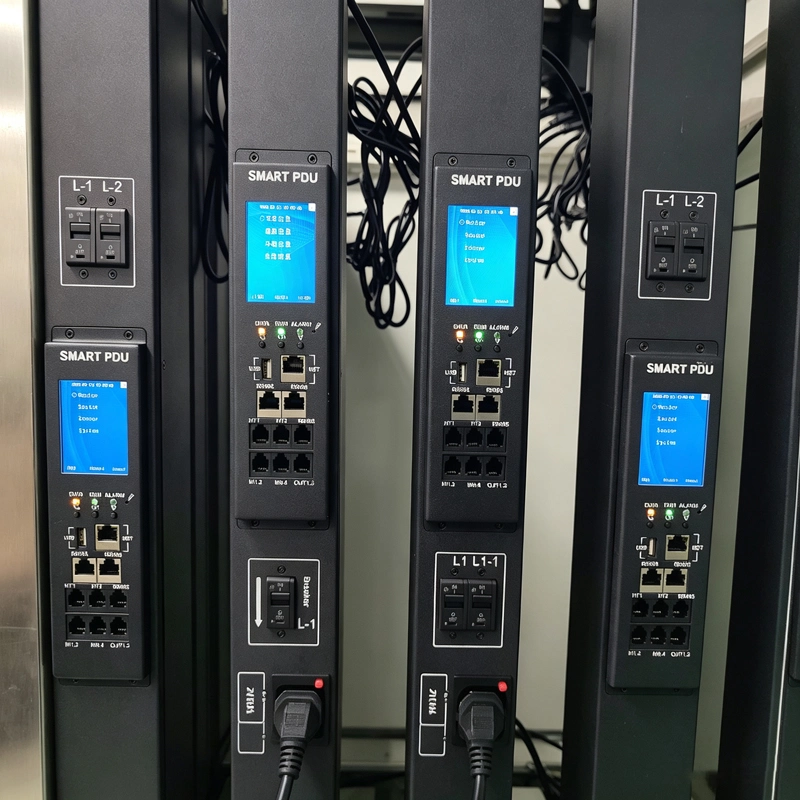
Provides real-time monitoring of voltage, current, frequency, power, power factor, and energy consumption. Clear operating data helps users understand rack-level power usage, identify abnormal loads, and improve power-management efficiency.
Outlet-Level Metering – Detailed Energy Analysis
Selected configurations support outlet-level current and energy metering, allowing users to track the power consumption of individual servers, network devices, and other connected equipment. This facilitates energy allocation, capacity planning, and equipment-level analysis.
Remote Outlet Switching – Flexible Power Control
Switched PDU configurations allow authorized users to remotely turn individual outlets on or off. Adjustable power-on sequencing helps reduce simultaneous inrush current and supports remote equipment reboot, scheduled operation, and controlled load management.
Network Communication – Centralized Remote Management
Optional Ethernet and RS-485 communication interfaces support protocols such as SNMP, Modbus TCP/RTU, HTTP/HTTPS, and other project-specific communication methods. The PDU can be integrated with DCIM, BMS, NMS, or other centralized monitoring platforms.
Intelligent Alarms – Early Warning of Power Risks
Configurable alarm thresholds can provide warnings for overload, overcurrent, abnormal voltage, power deviation, temperature, humidity, and other monitored conditions. Alarm notifications may be delivered through the local display, network platform, email, SNMP trap, or dry-contact output, depending on the configuration.
Environmental Monitoring – Improved Rack Reliability
Optional external sensors can monitor rack temperature, humidity, door status, water leakage, smoke, and other environmental conditions. Centralized electrical and environmental monitoring helps identify risks before they affect critical IT equipment.
High-Density Modular Design – Flexible Rack Configuration
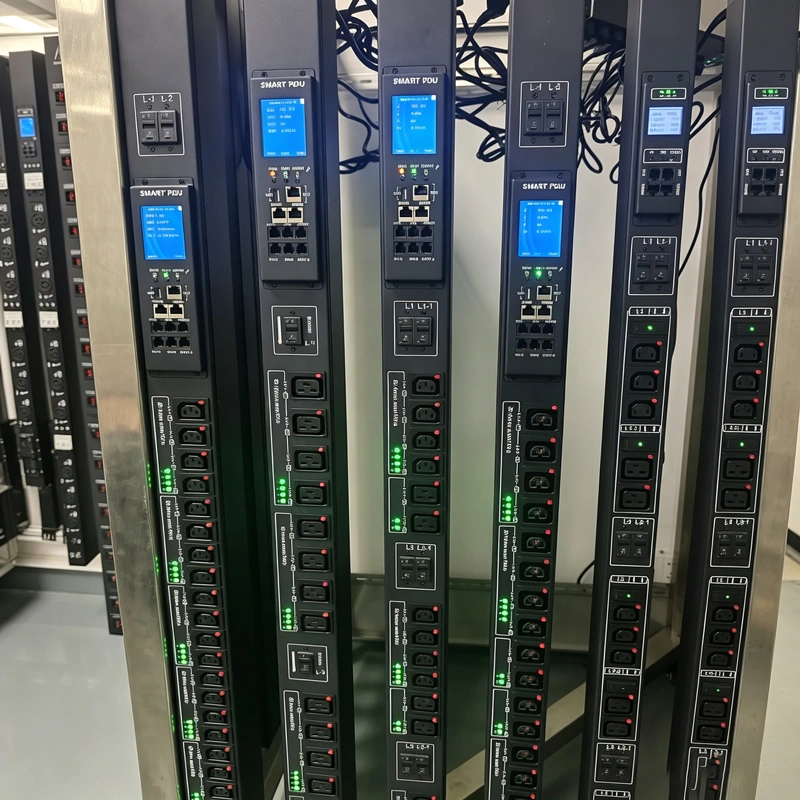
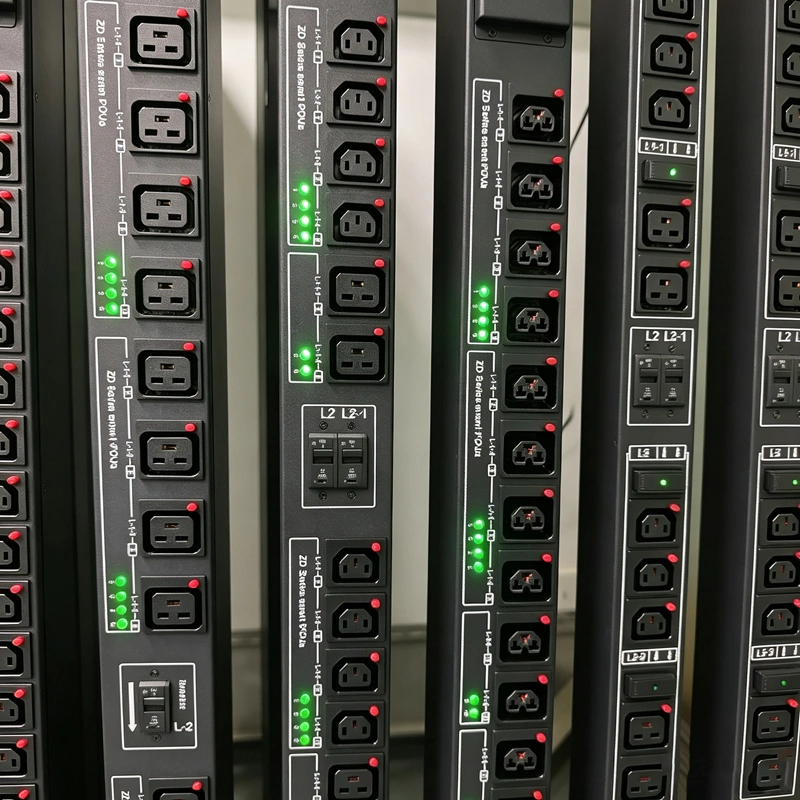
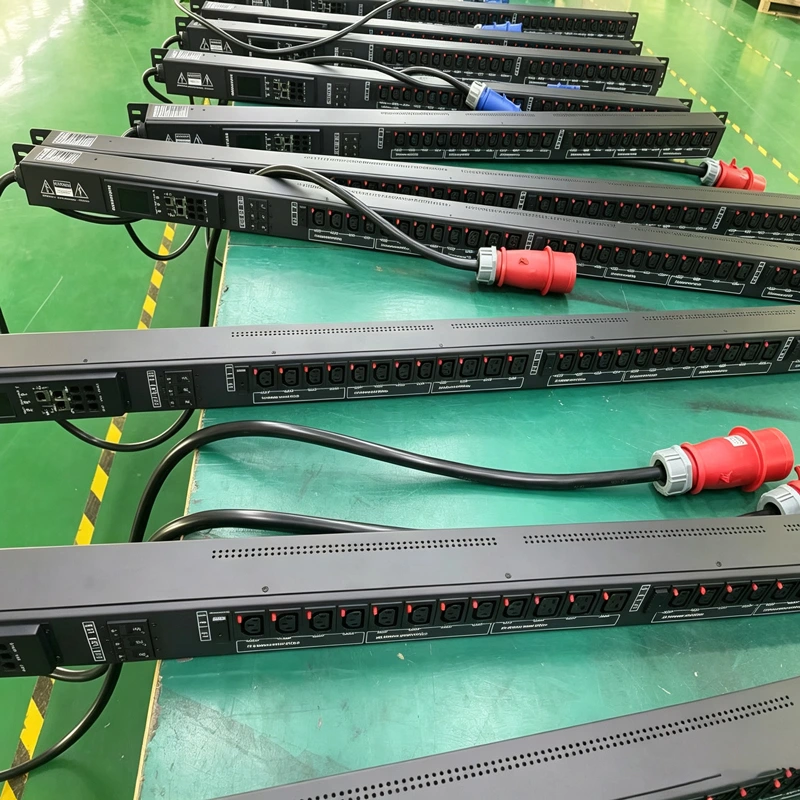
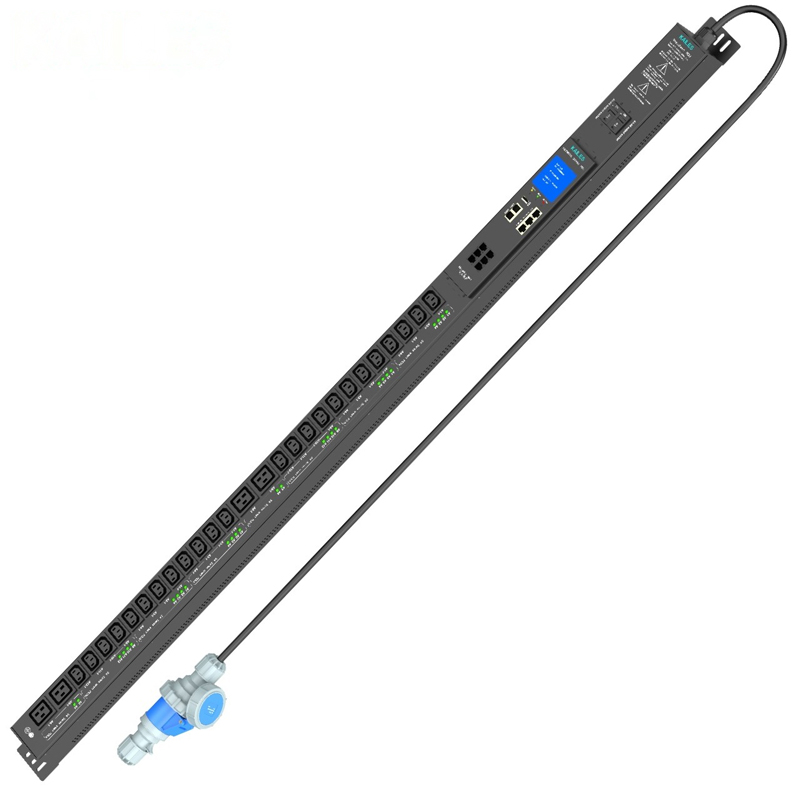
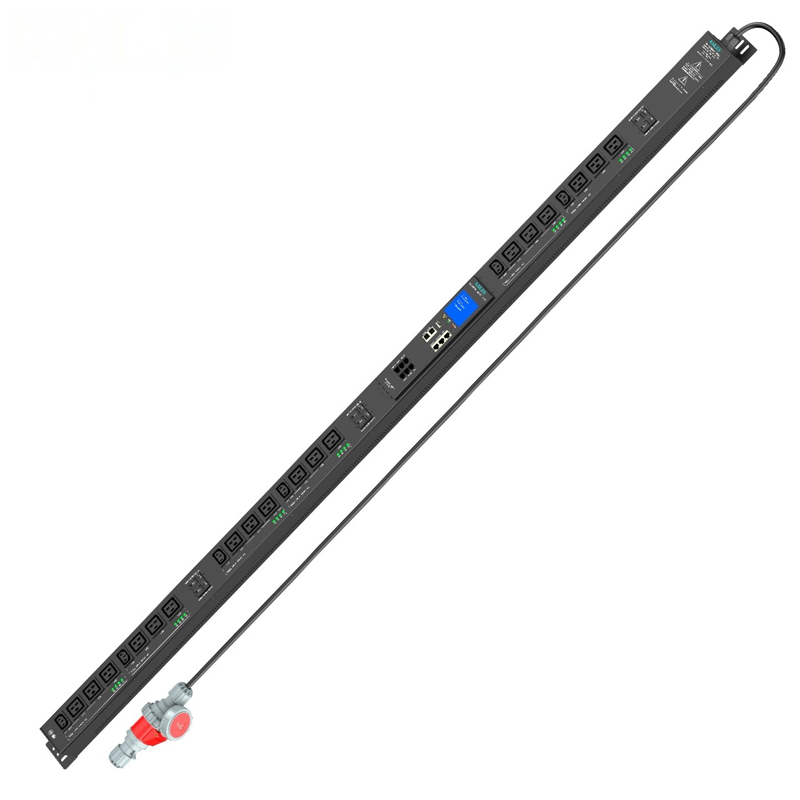
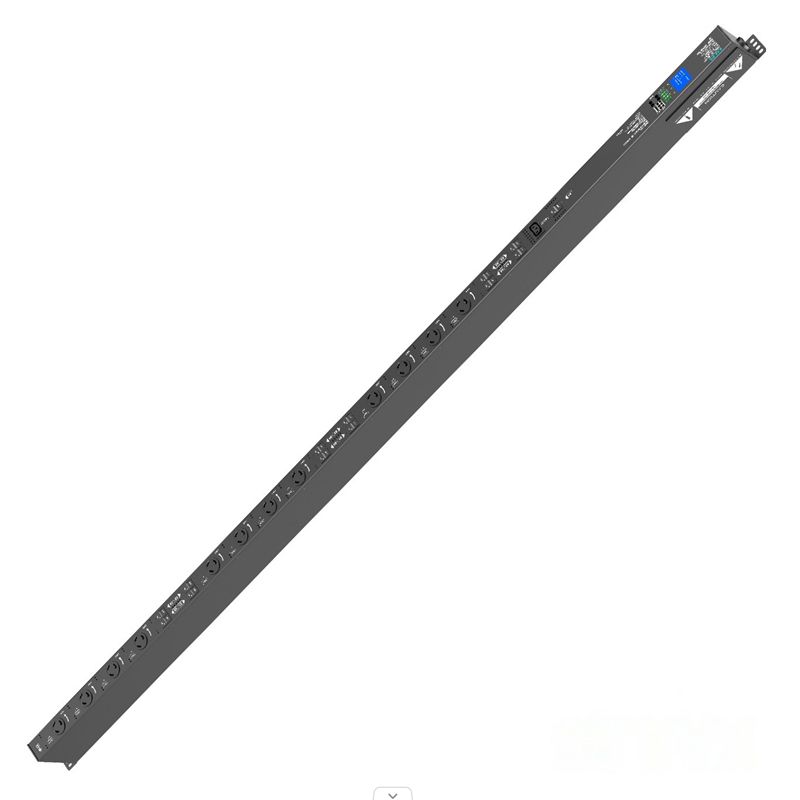
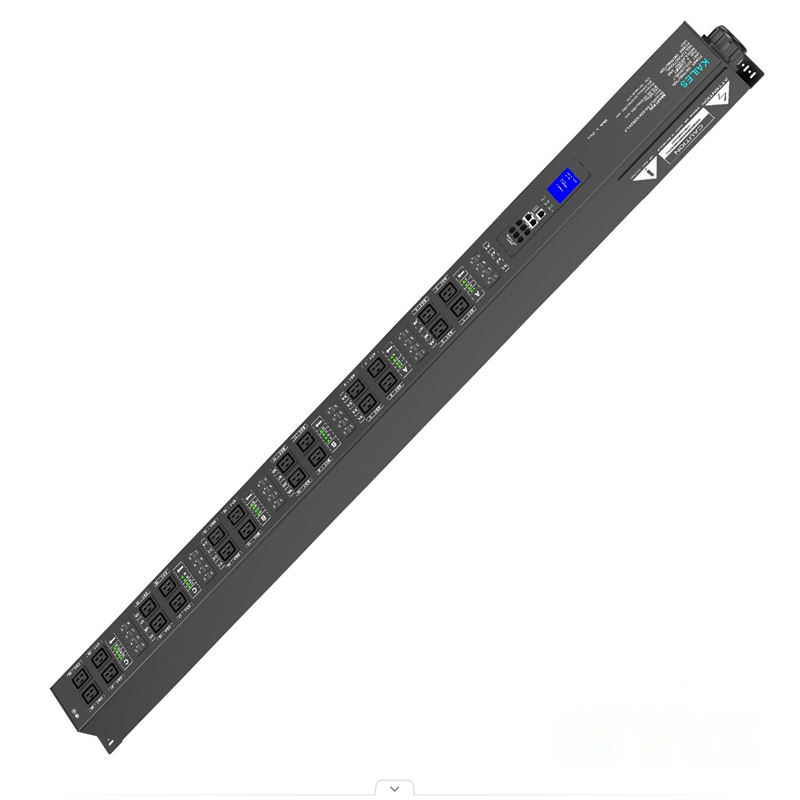
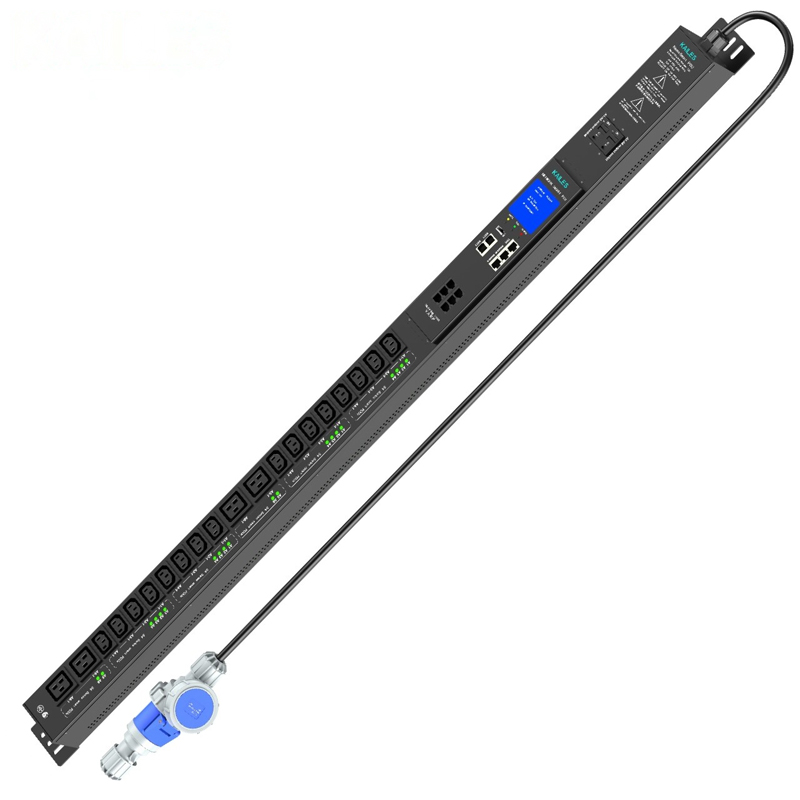
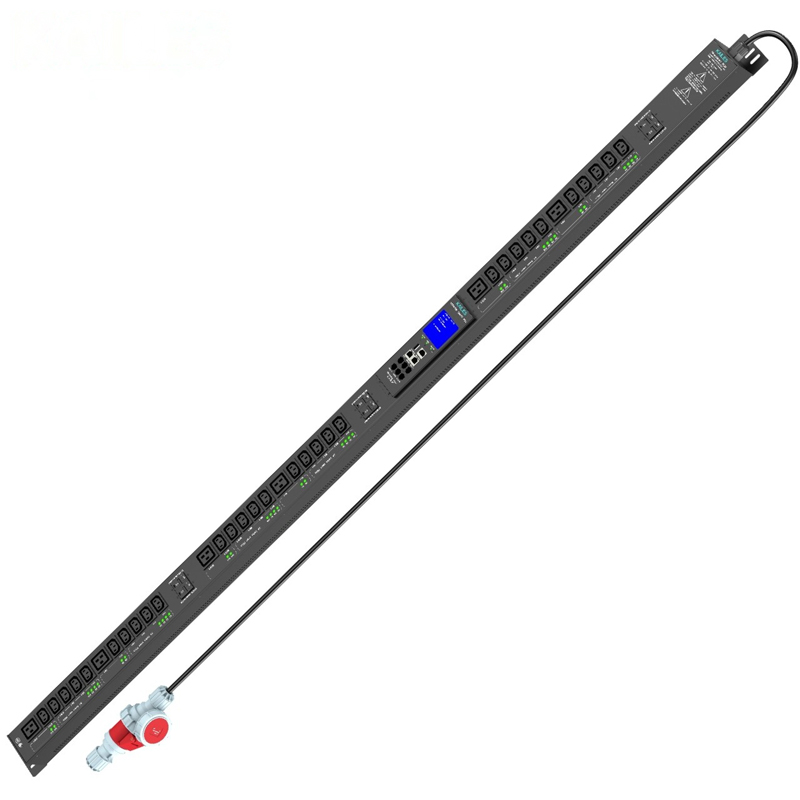
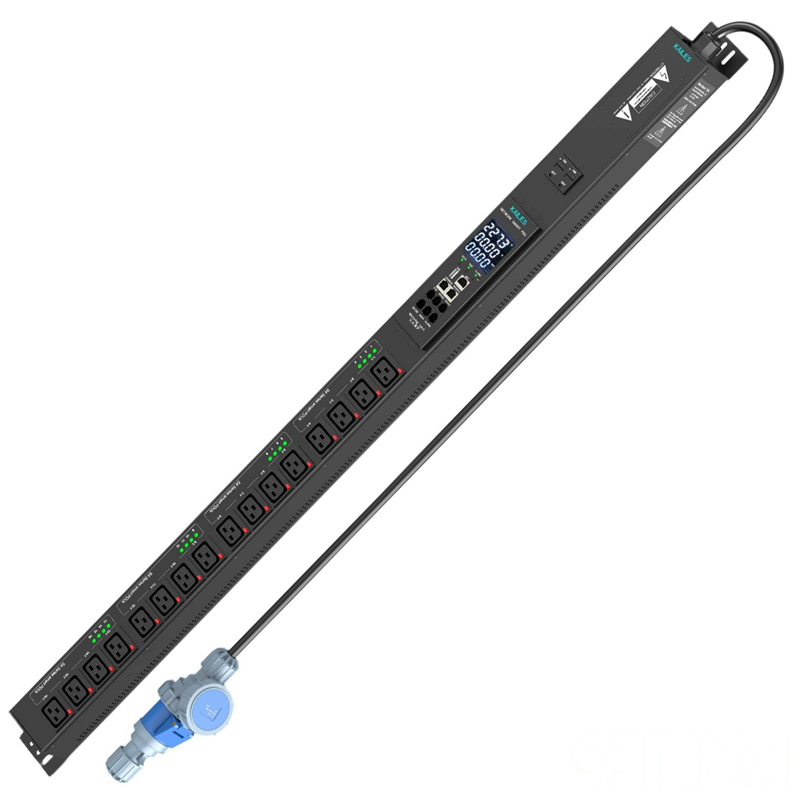
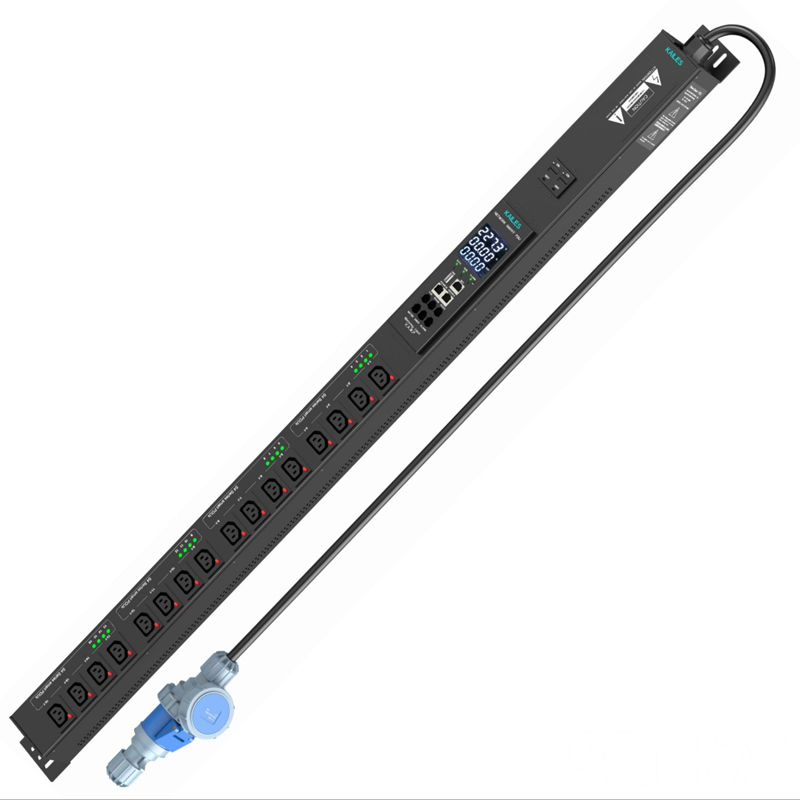
Available in vertical 0U and horizontal 1U/2U configurations with IEC C13, C19, NEMA, and other regional outlet options. Flexible outlet quantities, input plugs, power cords, circuit protection, and functional modules support different rack layouts and power requirements.
User Management and Event Logging – Secure, Traceable Operation
Selected networked configurations support multi-level user permissions, operation records, alarm history, event logs, and firmware management. These functions help prevent unauthorized control and provide traceable records for operation, maintenance, and fault analysis.
Product Image Display
Core Technical Parameter Selection Table for UL / North American and IEC / International Configurations
Dimension UL / North American Technical Options IEC / International Technical Options
Product Category Metered Input PDU, Metered Outlet PDU, Monitored PDU, Switched PDU, or Managed PDU
Whole-Product Standards ANSI/UL 62368-1 and CAN/CSA C22.2 No. 62368-1 are commonly used for certified ICT rack PDU configurations. UL 1363 applies only when the product qualifies as a Relocatable Power Tap rated 250 V AC or less and 20 A or less. Final category is determined by the NRTL. IEC/EN IEC 62368-1 is commonly used for ICT rack PDU configurations. EMC, plug, socket, cord-set, environmental, RoHS, and regional requirements apply separately.
Rated Input Voltage Common options: 100–125 V AC, 200–240 V AC, 208Y/120 V three-phase, or 415Y/240 V three-phase Common options: 220–240 V single-phase or 380–415 V three-phase
Rated Input Current Typical options: 15 A, 20 A, 30 A, 50 A, or 60 A, subject to the selected plug, cord, branch protection, and certified design Typical options: 10 A or 16 A with IEC 60320 input; 16 A, 32 A, or 63 A with IEC 60309 industrial input, subject to the verified design
Frequency 50/60 Hz
Phase / Wiring Single-phase L–N–PE or L1–L2–PE; three-phase 3P+N+PE or 3P+PE according to the supply system
Input Plug / Inlet NEMA 5-15P, 5-20P, L5-20P, L5-30P, L6-20P, L6-30P, L21-20P, L21-30P, approved pin-and-sleeve, or hardwired input IEC 60320 C14/C20 for lower-current models; IEC 60309 16 A, 32 A, or 63 A; Schuko, BS 1363, or other country-specific input plugs
Output Receptacle Standards NEMA receptacles evaluated to UL 498; IEC-style outlets evaluated to UL 60320 or as part of the certified PDU construction IEC 60320-1 appliance outlets; IEC 60884-1 or relevant national standards for household-type socket systems
Output Receptacle Types NEMA 5-15R, NEMA 5-20R, IEC C13, IEC C19, or approved mixed-outlet configurations IEC C13, IEC C19, Schuko Type F, French Type E, BS 1363, or other regional sockets
Outlet Quantity 4-48 Unit
Metering Level Input level, phase level, branch/breaker level, or individual outlet level
Electrical Measurements Voltage, current, frequency, active power, apparent power, power factor, active energy, and optional load percentage
Metering Accuracy Accuracy class is selected by model and measurement function. Publish only values verified by the applicable test report and product specification.
Local Display Optional LCD/OLED display for input, phase, branch, or outlet measurements; display rotation and screen-lock functions may be available
Remote Outlet Switching Optional individual or grouped outlet ON/OFF/reboot control for Switched or Managed models; not included on Metered-only models
Power-On Sequencing Optional configurable outlet-delay or sequential startup to reduce simultaneous inrush and coordinate equipment startup
Network Interface 10/100 Ethernet or model-specific Ethernet interface; optional RS-485 serial communication
Communication Protocols Optional HTTPS/Web GUI, SNMP v1/v2c/v3, Modbus TCP/RTU, SSH/CLI, REST or JSON API, NTP, SMTP, Syslog, and project-specific protocols
Platform Integration Optional integration with DCIM, NMS, BMS, SCADA, or enterprise monitoring systems, subject to protocol and data-point compatibility
Alarm Functions Configurable thresholds for current, load percentage, voltage, power, energy, temperature, humidity, breaker status, sensor status, and communication events
Alarm Outputs Local display, buzzer or indicator, email, SNMP trap/inform, Syslog, dry contact, or platform notification, depending on model
Environmental Sensors Optional temperature, humidity, door contact, water-leak, smoke, airflow, differential-pressure, or dry-contact sensors; available quantity depends on controller and sensor-bus capacity
User Management Optional multi-level accounts, role-based permissions, local or remote authentication, operation logs, event history, and session timeout
Cybersecurity Options HTTPS, SNMPv3, SSH, configurable firewall, password policy, access-control lists, signed firmware, secure update, certificate management, and protocol-disable functions where supported
Firmware / Configuration Local or remote firmware update, configuration backup/restore, batch deployment, and factory reset options may be provided
Daisy-Chain / Cascading Optional network or sensor cascading for multiple PDUs; maximum quantity and redundancy method depend on the model
Circuit Protection Approved circuit breaker, fuse, or supplementary protector according to the certified circuit design. UL 489 and UL 1077 devices have different functions and are not automatically interchangeable. MCB, circuit breaker, or fuse according to the verified design; commonly selected from applicable IEC 60898-1, IEC 60947-2, or fuse standards
Surge Protection Optional SPD evaluated to UL 1449 where included in the certified configuration Optional SPD selected and evaluated according to IEC 61643-11 and applicable installation requirements
Power Cord Approved power-supply cord or cord set; UL 817 applies as appropriate Cord set selected according to IEC 60799, applicable cable standards, plug standard, current rating, and national requirements
Mounting Format Vertical 0U, horizontal 1U/2U, tool-less mounting buttons, or rack brackets
Enclosure Material Aluminum alloy or steel housing with protective finish; grounding/bonding according to the certified design
Operating Environment Indoor dry-location rack installation unless the specific certified model is marked for another environment; operating temperature and altitude are model-specific
Certification / Marking UL Listed, cULus, or another NRTL mark only when the exact model, firmware-related safety functions, and manufacturing location are covered by a valid certification file CE/UKCA declarations, CB Scheme documentation, RoHS, EMC, and other marks only after applicable conformity assessment and technical documentation are completed
Customization Boundary Changes to plugs, receptacles, cords, current, protection, outlet quantity, controller, relay board, sensors, firmware, or housing must remain within the certified construction or be submitted for evaluation
Installation Guide
KAILES: One-Stop Service System from Design to Global Delivery
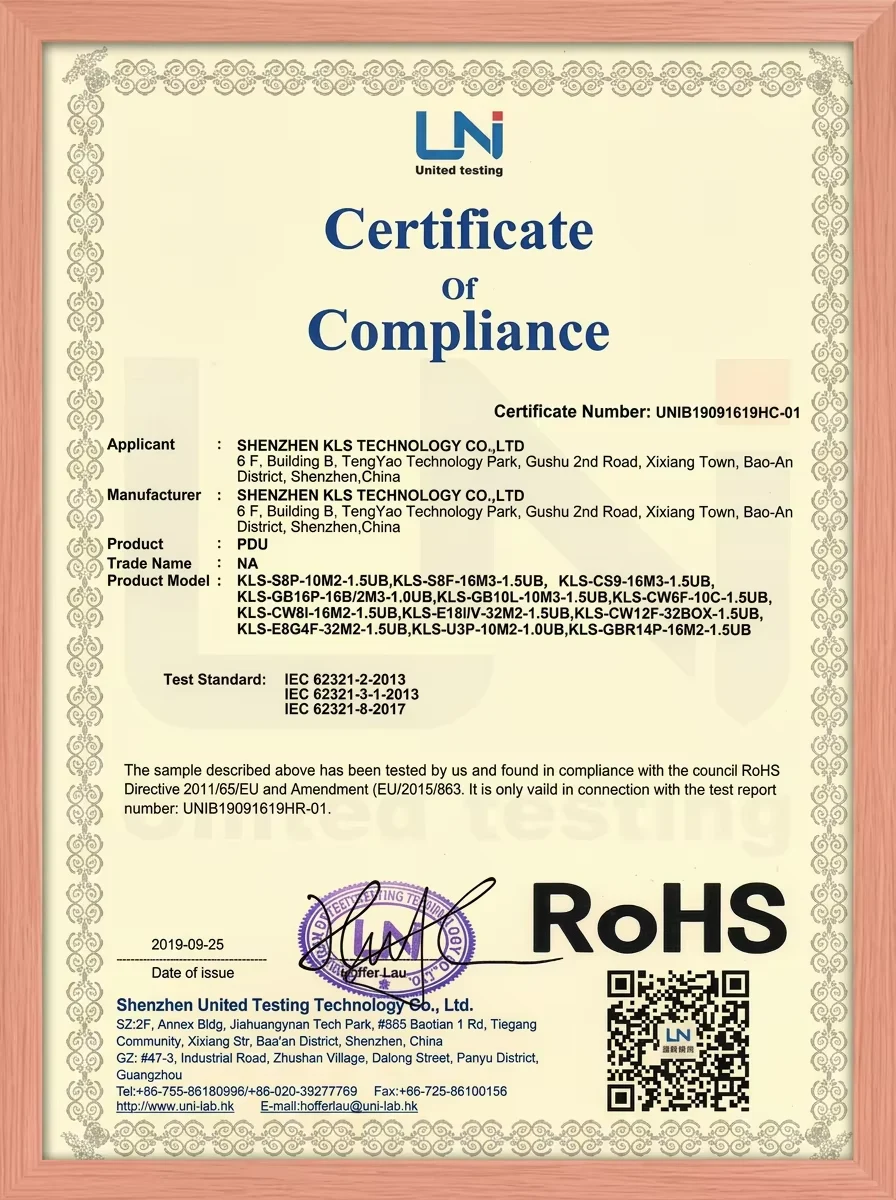
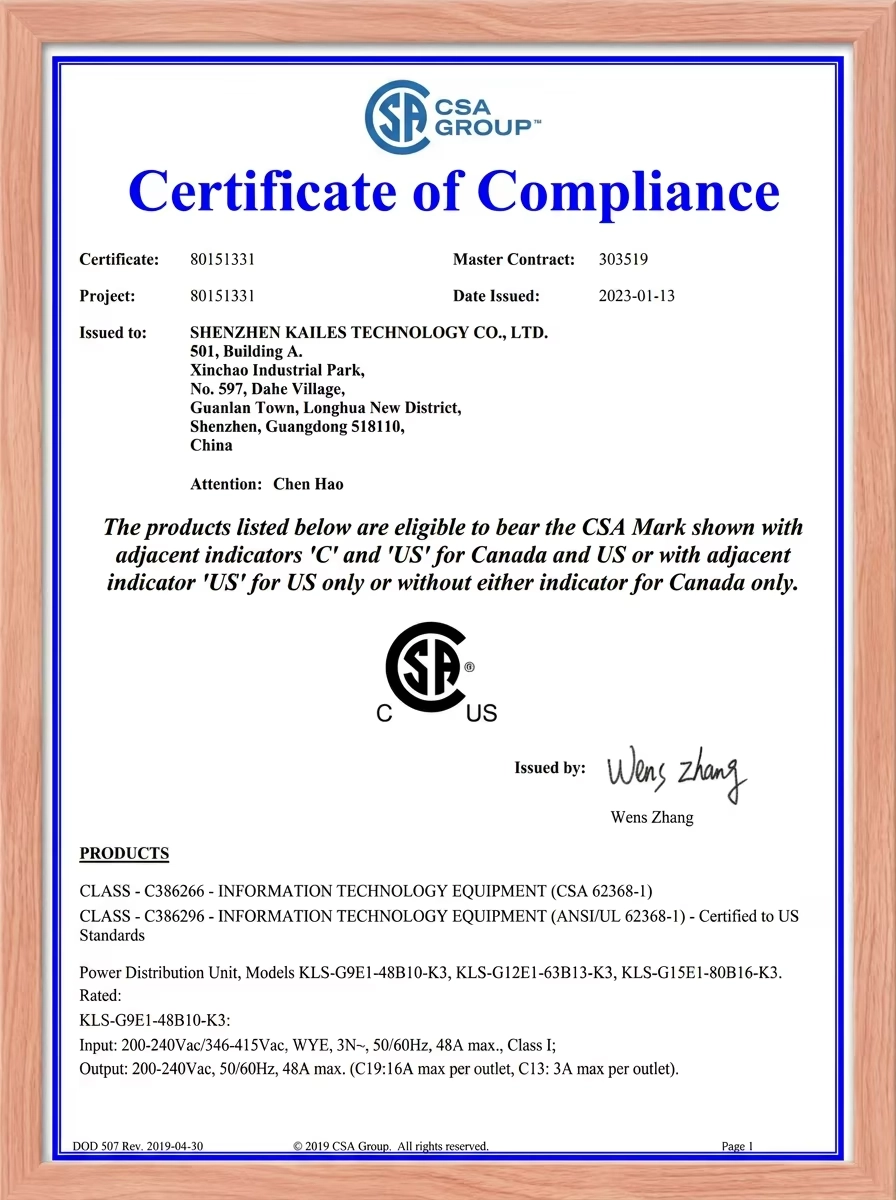
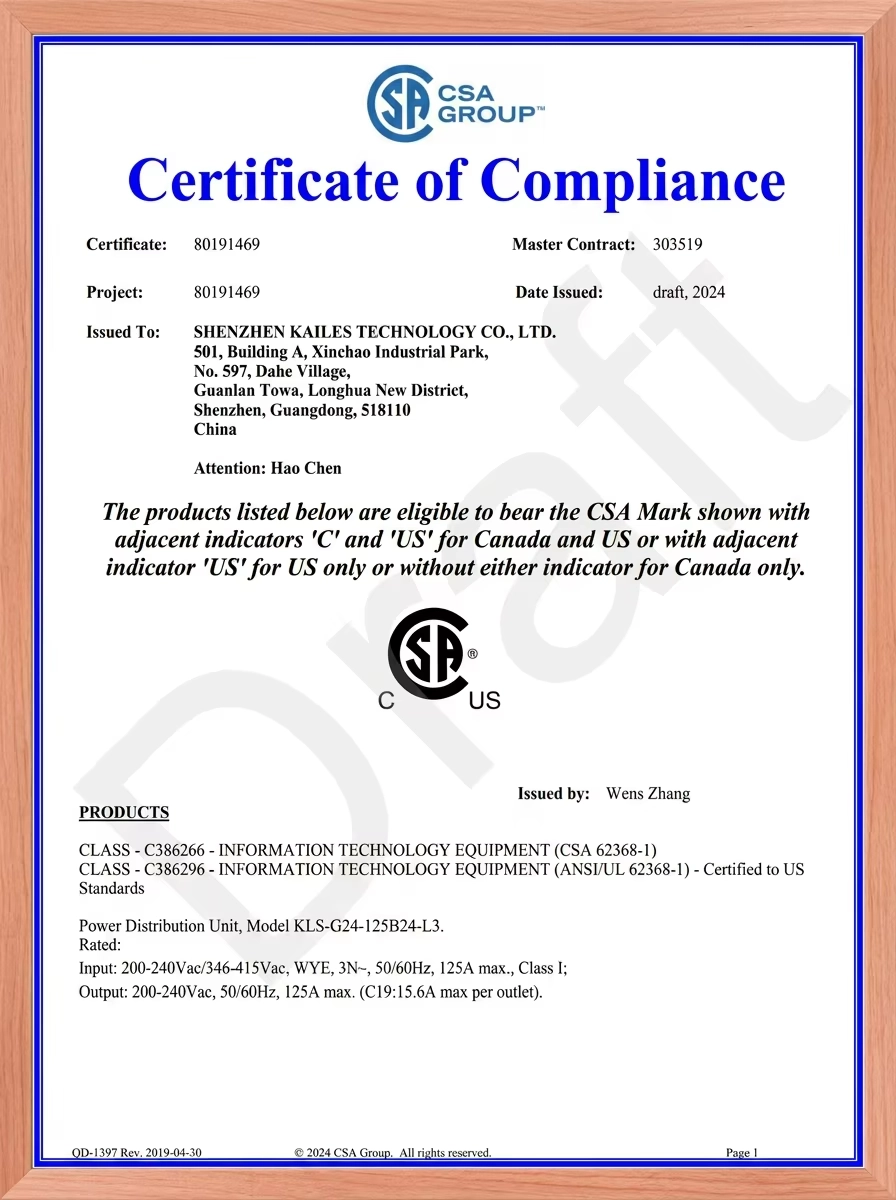
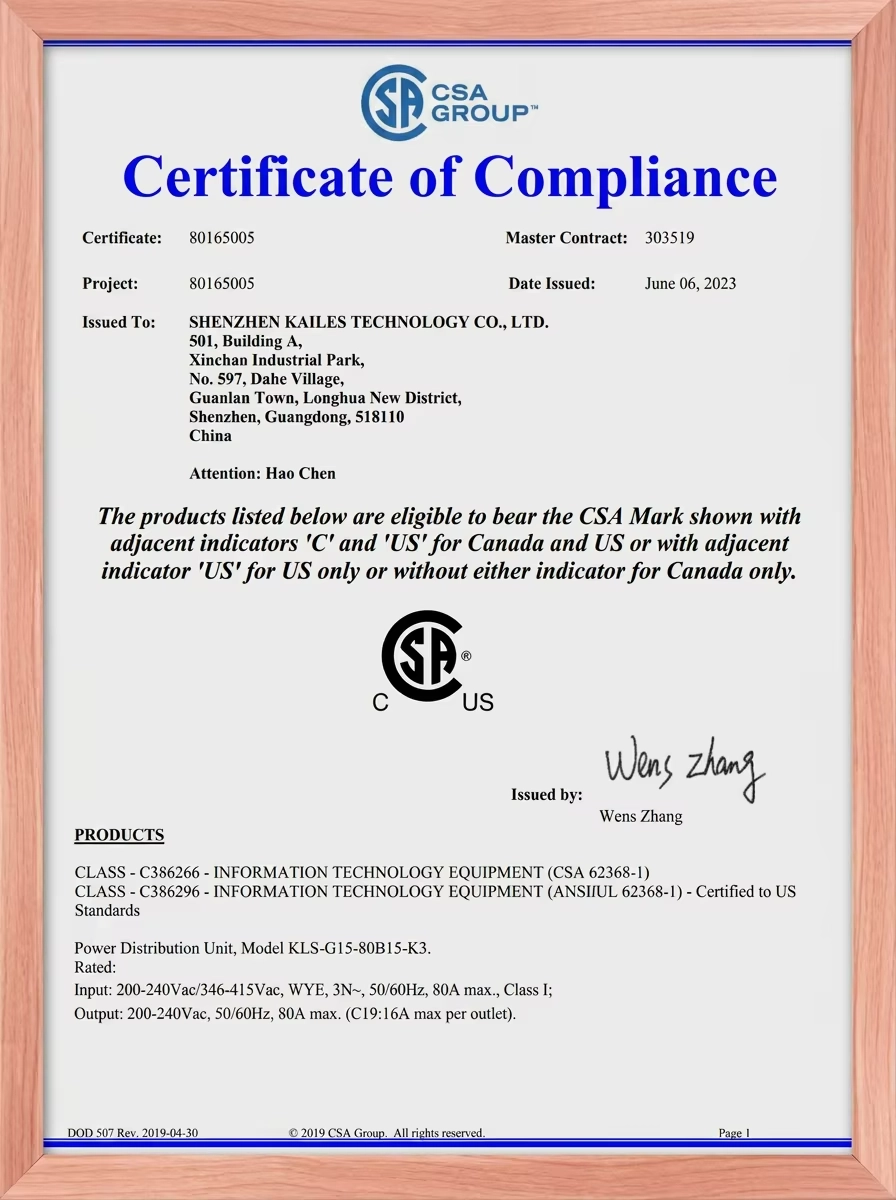
Certification Certificate
Frequently Asked Questions
Experiential Marketing
What is the difference between a Smart PDU and a Basic PDU?
A Basic PDU provides power distribution only. A Smart PDU adds functions such as electrical metering, network monitoring, configurable alarms, environmental sensors, event logging, and—on Switched or Managed models—remote outlet control.
What Smart PDU types are available?
Available functional levels can include Metered Input, Monitored Input, Metered Outlet, Switched, and Managed PDUs. These range from local rack-load display to network monitoring, outlet-level metering, and individual outlet switching. Functions vary by model.
What electrical parameters can the Smart PDU monitor?
Depending on the selected model and metering level, the PDU can monitor voltage, current, frequency, active power, apparent power, power factor, energy, and load percentage. Measurements may be available at input, phase, branch/breaker, or individual outlet level.
Can the outlets be switched or rebooted remotely?
Yes, on Switched and Managed PDU configurations. Authorized users can turn individual outlets or outlet groups on and off, perform remote reboots, schedule operations, and configure sequential startup. Metered-only and Monitored-only models do not include remote outlet switching unless specifically stated.
Which communication protocols are supported?
Model-dependent options can include Ethernet, RS-485, HTTPS/Web GUI, SNMP v1/v2c/v3, Modbus TCP/RTU, SSH/CLI, REST API, NTP, SMTP, and Syslog. Integration with DCIM, NMS, BMS, or SCADA platforms depends on protocol and data-point compatibility.
What alarm and environmental-monitoring functions are available?
Configurable thresholds can be provided for current, load percentage, voltage, power, energy, temperature, humidity, breaker status, and communication events. Optional sensors can monitor temperature, humidity, door status, water leakage, smoke, airflow, differential pressure, or dry-contact signals. Supported sensor quantity depends on the controller.
How are user access and cybersecurity managed?
Selected networked models can support role-based user accounts, password policies, HTTPS, SNMPv3, SSH, access-control lists, session timeout, event logs, certificate management, signed firmware, and secure firmware updates. Available security functions depend on the controller and firmware version.
Can the Smart PDU be customized for our project?
Yes. Input voltage, phase, current, plug, outlet type, outlet quantity, metering level, remote switching, communication protocols, sensors, cord length, mounting format, labels, and firmware settings can be configured within the approved product platform. Hardware or software changes outside the certified design may require additional evaluation.
Contact us

Committed to providing customers with intelligent, safe and reliable power distribution solutions.

Wechat