
For many buyers, short-circuit ratings only become urgent when a project is already moving. The drawings are almost approved. The switchboard has been quoted. The panelboard schedule looks complete. Then someone asks a hard question: Does the equipment’s SCCR match the available fault current at the installation point?
That question can stop a project fast.
In commercial buildings, industrial plants, renewable energy facilities, and AI data centers, power systems are carrying heavier loads than before. Larger transformers, shorter feeder runs, backup power, and dense electrical rooms can all raise fault current. This makes SCCR vs AIC more than a code topic. It becomes a real buying decision for anyone choosing switchboards and panelboards.
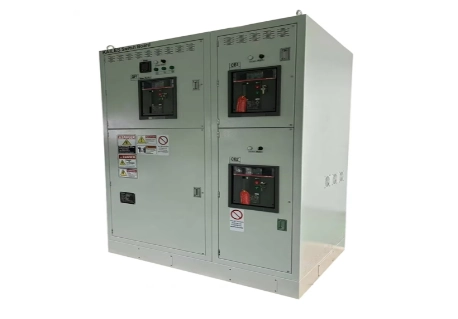
At KAILES, we build power distribution products for projects where safety, clear documentation, and field fit matter. Our Product Center includes switchboards, panelboards, control cabinets, STS dual power transfer switches, PDUs, and related power solutions.
Why Short-Circuit Ratings Are Now a Buying Priority
The market is moving toward higher electrical capacity. AI rooms, manufacturing lines, battery systems, and smart buildings all need more stable power. At the same time, inspection teams and project owners are asking for clearer proof that equipment can handle real site conditions, not just a general catalog value.
Power Growth Changes the Risk
A short circuit is not a normal overload. It is a fault condition that can release very high current in a very short time. If the switchboard or panelboard cannot withstand that fault current, consequences include fire risk, permanent equipment damage, arc flash risk, and inspection non-compliance.
This is why the available fault current must be known before final equipment selection. The value depends on many site details, including:
- Utility transformer size and impedance
- Distance from transformer to equipment
- Cable size, length, and material
- System voltage and phase
- Upstream protective devices
- Generators or other power sources
- Future expansion plans
A buyer does not need to calculate every value alone. But the buyer should know that these numbers drive the short-circuit rating decision.
Faster Projects Leave Less Room for Guesswork
Many projects now move quickly. Data center and industrial clients often ask for shorter lead times, modular growth, and faster commissioning. That speed is useful, but it also increases the cost of a wrong assumption.
If the available fault current is 65 kA and the selected panelboard is only suitable for 10 kA, the project has a serious problem. If the drawing says one thing and the field label says another, the authority review may also fail. The solution is simple in principle: confirm the numbers before approving the build.
SCCR and AIC in the Specification Process
SCCR and AIC are often used together, but they are not the same thing. This is where many mistakes begin. A buyer may see a high interrupting rating on a breaker and assume the whole assembly has the same rating. That is not always true. The full assembly must be reviewed as a system.
SCCR Applies to the Equipment Assembly
SCCR means Short-Circuit Current Rating. It tells you the maximum short-circuit current that an electrical assembly can safely withstand under stated conditions. For a switchboard or panelboard, this rating is tied to the complete assembly, not only one part inside it.
A proper SCCR review looks at the busbar, enclosure, breakers, fuses, spacing, wiring, and tested combinations. The lowest-rated part can limit the final rating unless a tested combination or approved series rating method is used.
Our Switchboard options are designed around project-level distribution needs, with rated current choices from 1000A to 6000A and SCCR options such as 65 kA, 85 kA, 100 kA, 150 kA, and 200 kA at common low-voltage levels. This gives engineering teams more room to match equipment to real site fault current.
AIC Applies to Interrupting Devices
AIC means Ampere Interrupting Capacity. In daily engineering work, it usually refers to the interrupting ability of a circuit breaker or fuse. It answers a different question: can this protective device interrupt the fault current safely?
A breaker may have a high AIC value, but that does not automatically make the whole panelboard or switchboard suitable for the same short-circuit level. The assembly rating still matters. This is the mistake many procurement teams make when they only check the main breaker label.
A clear specification should state both:
- Available fault current at the equipment location
- Required SCCR of the switchboard or panelboard
- Interrupting rating of main and branch protective devices
- Whether the system is fully rated or series rated
- Required standard, such as UL 891, UL 67, IEC 61439, or local project rules
How Buyers Should Read Available Fault Current
Before you approve a quote, ask where the available fault current value comes from. A number without context is weak. A number tied to a calculation date, one-line diagram, transformer data, and cable information is much more useful. This helps the supplier design the cabinet around the actual project, not a rough guess.
For a new building, the value may come from the electrical engineer. For an expansion, it may need an updated study. For a retrofit, the old label may not match the current utility service or transformer.
Key questions to ask include:
- Was the available fault current calculated at the exact equipment point?
- Is the calculation based on current utility transformer data?
- Has the system changed since the last study?
- Will future capacity growth raise the fault current?
- Does the marked value include a calculation date?
- Does the equipment nameplate match the required rating?
These questions are practical. They help buyers avoid ordering equipment that looks correct on paper but fails during approval.
Fully Rated or Series Rated: Which Path Fits the Project?
After the fault current is known, the project team must choose how the system will meet it. A fully rated system and a series rated system can both be used in the right conditions. The better choice depends on budget, approval needs, maintenance style, and how much the system may change later.
Fully Rated Systems Give Simpler Clarity
In a fully rated system, each protective device has an interrupting rating equal to or higher than the available fault current at its line terminals. This approach is often easier for engineers, inspectors, and maintenance teams to read.
The main benefits are:
- Clearer equipment review
- Easier future breaker replacement
- Less dependence on exact upstream and downstream combinations
- Better fit for projects where future changes are likely
The tradeoff is cost. Fully rated designs can cost more, especially when fault current is high. Still, for complex sites, the added clarity may be worth it.
Series Rated Systems Need Better Documentation
A series rated system uses a tested combination of upstream and downstream protective devices. The upstream device helps limit the fault current seen by the downstream device. This can reduce cost, but only when the combination is properly tested, listed, marked, and installed as designed.
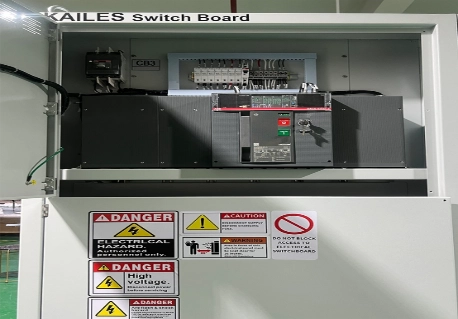
For buyers, the risk is not the concept itself. The risk is poor documentation. If the series rating label is missing, if the wrong breaker is installed later, or if the upstream device changes, the rating may no longer apply.
A series rated panelboard should come with:
- Clear series rating labels
- Approved device combination details
- One-line diagram notes
- Maintenance instructions
- Replacement breaker limits
- Field documentation for the inspector
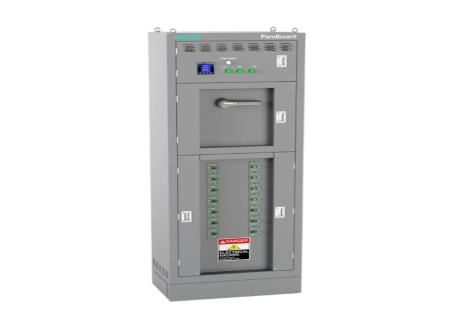
Our Panelboard products support flexible configurations, protection devices, metering options, and intelligent management choices for different terminal distribution needs. When buyers share project ratings early, we can help align structure, protection, and documentation before production.
What to Put in a Switchboard or Panelboard RFQ
A strong RFQ saves time for both sides. It also prevents suppliers from quoting a low-cost option that does not fit the site. If SCCR and AIC are missing from the request, the quotation may be incomplete.
For better results, include these items:
- Project location and target market
- Standard required by the project
- Rated voltage and system type
- Main bus current rating
- Available fault current in kA
- Required SCCR in kA
- Main and branch breaker requirements
- Fully rated or series rated preference
- Indoor or outdoor enclosure rating
- Top or bottom cable entry
- Front access or rear access requirement
- Metering, monitoring, or communication needs
- Required drawings, test reports, and labels
KAILES provides Pre-sale Service for project communication, technical proposal work, drawing support, and solution planning. This is useful when the buyer has a target rating but still needs help turning it into a workable cabinet design.
Common Mistakes That Cause Approval Delays
Most SCCR and AIC problems are avoidable. They happen because teams confirm the rating too late or assume one label covers the whole assembly. A better review process can catch these issues before the cabinet is built.
Watch for these common mistakes:
- Treating breaker AIC as the wholeassembly SCCR
- Using outdated fault current values
- Forgetting to mark available fault current and calculation date
- Mixing fully rated and series rated logic in one schedule
- Replacing breakers without checking the series rating
- Choosing panelboards before transformer data is final
- Ignoring future expansion that may raise fault current
- Requesting no factory test or inspection documents
Our After-sale Service supports technical response, warranty help, and long-term service needs after delivery. For projects with strict inspection requirements, good after-sale support can reduce stress during commissioning and later maintenance.
Conclusion
SCCR vs AIC is not just a technical distinction. It is a project control point. SCCR tells you whether the switchboard or panelboard assembly can withstand the available fault current. AIC tells you whether a breaker or fuse can interrupt that current. Buyers should confirm the available fault current early, decide between fully rated and series rated designs, and request the right labels, drawings, and test documents before approval. This is especially important as power demand grows in data centers, industrial plants, and smart buildings. A clear specification protects the schedule, supports inspection, and helps the electrical system stay safer over time.
FAQs
Q: What is the main keyword in SCCR vs AIC selection?
A: SCCR vs AIC helps buyers compare assembly rating and breaker interrupting rating.
Q: What SCCR should a panelboard have?
A: It should match or exceed the available fault current, such as 10 kA, 65 kA, or 100 kA.
Q: Is series rated panelboard selection acceptable?
A: Yes, if tested, labeled, documented, and installed with the correct breaker combination.

