
Factory expansion, AI data centers, EV battery plants, and microgrid projects are placing greater demands on low-voltage power systems. For many U.S. buyers, the hard part is not simply finding a cabinet. The real challenge is choosing the right equipment before drawings are locked, cables are routed, and the project schedule becomes tight.
A switchboard, panelboard, control cabinet, and PDU may all appear in the same electrical room, but they do not do the same job. If a buyer treats them as one general “power cabinet,” the project can run into wrong ratings, failed inspections, missing labels, limited expansion space, or long lead times.
在 凯尔斯, we work with power distribution needs across data centers, industrial automation, smart buildings, and new energy projects. Our 产品中心 includes switchboards, panelboards, control cabinets, PDU products, STS dual power switchers, and related power solutions.
Start with the Project, Not the Cabinet Name
Many procurement teams begin by asking for a cabinet size or a rated current. That is understandable, but it can lead to weak specifications. A better starting point is the project itself: what loads will be connected, how the system will grow, and what approval rules must be met in the target market.
Match the Load Plan to the Main Distribution Point
A new factory or data center may not use full power upon initial commissioning. More production lines, chargers, cooling units, servers, or testing equipment may be added later. This is why the main switchboard should be selected with both current demand and future load in mind.
Before asking for a quote, buyers should prepare:
- Single-line diagram
- Load schedule
- Rated voltage and phase
- Transformer data
- Main incoming current
- Available fault current
- Feeder quantity and sizes
- Future expansion reserve
- Indoor or outdoor installation conditions
A 2000A switchboard may be right for one industrial plant but too small for another. The number alone is not enough. Buyers also need to check breaker layout, busbar design, short-circuit rating, cable entry, ventilation, and maintenance access.
Connect Switchboards, Panelboards, Control Cabinets, and PDU Units
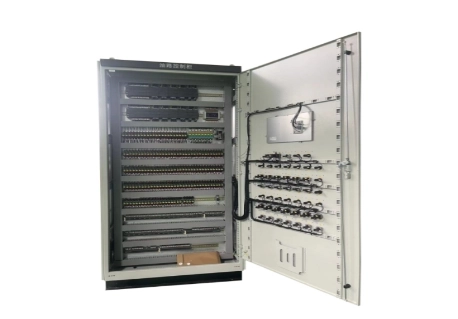
The main switchboard is usually responsible for receiving and distributing larger power. Panelboards divide power into smaller branch circuits. Control cabinets handle machine logic, motor control, PLC signals, and industrial power control. PDU units may serve IT racks, edge computing cabinets, test benches, or server equipment inside a factory.
When these products are planned together, the system is easier to install and maintain. When they are planned separately, small mistakes appear later: the panelboard has no spare circuits, the PDU cable direction is wrong, or the control cabinet does not match the machine control sequences.
Choose the Right Equipment Role
U.S. buyers often compare several proposals that use different terms. One supplier may quote a switchboard. Another may suggest a panelboard. A third may include a control cabinet or PDU. The buyer needs a clear way to judge whether each product fits the actual job.
When to Choose a Switchboard
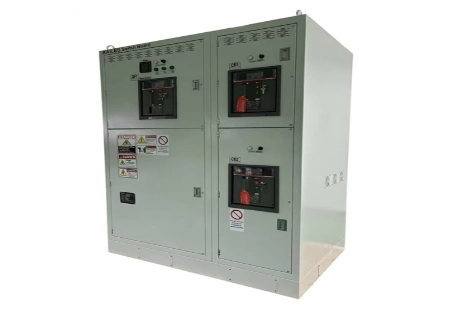
A switchboard is commonly used for main or large-scale low-voltage distribution. It can include main breakers, feeder breakers, busbars, meters, and space for future circuits. In factories, it may sit near the transformer or service entrance. In data centers, it may feed downstream distribution equipment and rack power systems.
Buyers should check:
- Rated current, such as 1600A, 2000A, or higher
- Rated voltage
- SCCR or short-circuit current rating
- Main and branch breaker configuration
- Front access or rear access
- 顶部或底部电缆入口
- Metering and communication needs
- Applicable project standard
凯尔斯 总机 options can support different project requirements, including higher current distribution and project-based configuration discussions.
When to Choose a Panelboard
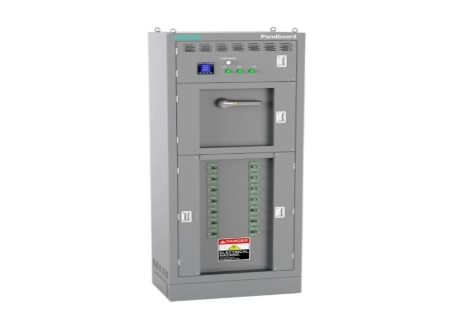
A panelboard is usually used for branch distribution. It may feed lighting, receptacles, small equipment, control loads, or local production areas. It is more compact than a large switchboard, but it still needs careful rating checks.
The phrase standard AIC ratings for panelboards is common in searches, but buyers should be careful. AIC often refers to the interrupting rating of breakers, while the panelboard assembly must still match the available fault current and project rules. The AIC rating label should be checked against the drawings and site conditions, not viewed as a decoration on the door.
凯尔斯 配电盘 products are built for terminal distribution needs in commercial, industrial, and similar electrical systems.
Check AIC, SCCR, and Labels Before Approval
A wrong short-circuit rating can delay inspection or force a redesign. This is especially important in facilities with larger transformers, shorter cable runs, backup power, or future expansion. Buyers should ask for rating information early, before production starts.
Do Not Judge the Whole System by One Breaker
A breaker may have a high AIC value, but that does not automatically mean the whole assembly is suitable for the same fault level. The busbar, enclosure, branch devices, wiring, and tested combinations all matter.
Before approving a switchboard or panelboard, buyers should confirm:
- 设备位置的可用故障电流
- Breaker interrupting rating
- Equipment SCCR
- Series-rated or fully rated design
- Nameplate information
- Drawing notes
- Required test documents
- Any AHJ or project-specific requirements
This step is not just for engineers. It protects the buyer’s schedule.
Keep Documentation Clear for U.S. Projects
U.S. projects often involve engineers, EPC teams, contractors, inspectors, and owners. Each group needs clear information. If drawings, labels, and quotes use different terms, the review process becomes slow.
A strong supplier should help clarify equipment type, ratings, cabinet arrangement, and project limits. This is one reason buyers often contact manufacturers earlier, especially when lead time is tight.
Add PDU Planning for Data and Industrial Rooms
Even when the main topic is switchboard and panelboard selection, PDU planning should not be ignored. Modern factories are adding more IT cabinets, automation servers, security systems, testing racks, and edge computing equipment. These smaller loads still need organized power distribution.
Choose PDU Features by Risk Level
A basic PDU may be enough for simple power distribution. A metered PDU gives local readings for current, voltage, power, and energy. A monitored or smart PDU adds remote data, alarms, and better visibility.
Buyers searching for a smart PDU manufacturer usually care about more than outlet count. They may need C13/C19 combinations, 0U mounting, circuit breaker protection, metal housings, special input plugs, or remote monitoring. KAILES PDU products include Basic PDU, Metered PDU, Monitored PDU, Smart PDU, and High Power PDU options for different rack and equipment needs.
Plan Custom Requirements Early
Many buyers are looking for power distribution unit manufacturers that can do custom builds for specific requirements. That usually means the project has real limits: tight rack space, special cable direction, non-standard input, mixed outlets, industrial-grade operating environments, or future monitoring needs.
For these projects, buyers should share device lists, rack drawings, input requirements, outlet layout, current rating, and communication needs. A custom PDU should solve the site problem, not create another one.
Avoid Late-Stage Buying Mistakes
Most power distribution mistakes are found late because early RFQs are too simple. A short request such as “need switchboard and panel board” does not give a manufacturer enough information to quote accurately. The result may be a low initial price, followed by change orders and schedule pressure.
Prepare a Strong RFQ Package
A better RFQ should include:
- Project market and applicable standard
- Single-line diagram
- Load schedule
- Rated voltage and current
- Available fault current
- Required SCCR
- Panelboard circuit count
- Control logic or I/O list
- PDU outlet and input needs
- Cabinet size limits
- Cable entry direction
- Required delivery date
凯尔斯 Pre-sales 服务 supports technical consultation, demand review, solution design, and drawing review&revision response. This helps buyers turn early project information into a clearer equipment plan.
Choose a Supplier That Can Support Changes
Factory and data center projects change. Loads grow, cable routes shift, drawings are updated, and delivery dates move. A supplier should be able to respond to those changes without leaving the buyer guessing.
At KAILES, we focus on practical project support, not only product supply. Our After-sales 服务 covers response, warranty, remote support, and maintenance help after delivery, which matters for long-life electrical assets.
结论
Switchboard and panelboard selection should begin with the project load, site conditions, standards, and future expansion plan. A 2000A switchboard, panelboard, control cabinet, or PDU can only be judged correctly when the buyer knows the voltage, current, available fault current, cable entry, installation space, and documentation needs. For U.S. factories, AI data centers, EV battery plants, and microgrid projects, early technical review helps reduce approval delays and late changes. KAILES supports buyers with switchboards, panelboards, control cabinets, PDU products, and project-based service so each part of the power system fits the real application.
常见问题解答
问: How do I know whether my project needs a switchboard or a panelboard?
A: Use a switchboard for main distribution and a panelboard for smaller branch circuits.
问: What information should I provide before asking for a 2000一个 switchboard quote?
A: Send the single-line diagram, load schedule, voltage, current, SCCR, and cabinet space.
问: Can KAILES support PDU and panelboard customization for U.S. projects?
A: Yes. KAILES can discuss custom PDU, panelboard, and switchboard needs based on project drawings.

