
Industrial power projects are becoming more complex. New factories, EV battery plants, automated warehouses, microgrids, and AI data centers all require more than a standard cabinet from a product catalog.
The challenge is not only the amount of power. Project owners also need clearer ratings, stronger protection, better monitoring, custom cabinet layouts, and reliable delivery. A switchboard that worked for an older factory may not fit a new production line. A control cabinet that looks complete may not match the machine logic. A panelboard with enough circuits today may have no room for tomorrow’s expansion.
As data center and industrial electricity demand continues to grow, power distribution equipment is becoming part of the project strategy rather than a late-stage purchase.
在 凯尔斯, we provide power distribution and control solutions for industrial automation, data centers, smart buildings, and new energy projects. Our solutions include switchboards, panelboards, control cabinets, PDU products, STS dual power switchers, and related equipment.
Why Standard Equipment Often Fails to Fit
Standard products are useful when the electrical system is simple and unlikely to change. However, many current industrial projects have unusual site conditions, changing loads, and strict approval requirements. This creates a gap between what is available in a catalog and what the project actually needs.
Factory Loads Are Changing Faster
A new factory may start with one production line and add several more within a short period. EV battery equipment, chargers, HVAC systems, motors, compressors, and automated machines can all change the original load plan.
This creates pressure on the main distribution system. The buyer may need:
- A higher incoming current rating
- More feeder sections
- Larger busbars
- Additional spare capacity
- Special cable entry
- More space for maintenance
- Better metering and communication
- Integration with generators or microgrids
A 2000A switchboard may be suitable for one site but insufficient for another. It is not enough to compare the current rating. The buyer must also review the transformer, voltage, fault current, feeder layout, enclosure, and future expansion plan.
Old Facilities Have Different Problems
A retrofit project is rarely a clean installation. Existing factories may have limited electrical room space, older cable routes, restricted access, or equipment from different project stages. The new cabinet must work with the existing system.
This is where standard dimensions can become a problem. A cabinet may be electrically suitable but impossible to move through the building. It may have the wrong cable entry direction or leave too little room for inspection and maintenance.
For customers reviewing low voltage switchboards in the USA, the physical site should be checked as carefully as the electrical specification.
Are Switchboards, Panelboards, and Control Cabinets Being Confused?
The terms switchboard, panelboard, and control cabinet often appear in the same RFQ. They may serve the same facility, but they are not interchangeable. A clear equipment boundary helps the project team avoid wrong quotations and approval problems.
Main Distribution Needs a Switchboard
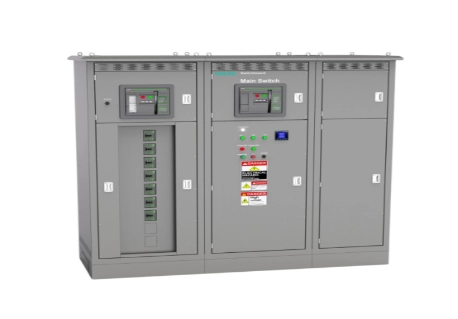
A switchboard is normally used for larger power distribution. It may receive power from a transformer or service entrance and distribute it through main and feeder breakers.
A switchboard specification may include:
- Main incoming breaker
- Feeder breakers
- Busbar system
- Metering
- Short-circuit rating
- Cable entry arrangement
- Future feeder space
- Front or rear access
For U.S. projects, the team should confirm the applicable standard, project specification, and inspection requirements before production. UL 891 may be relevant to switchboard applications, but the exact equipment scope must be verified for each project.
Branch Circuits Need a Panelboard
A panelboard is usually used for smaller branch distribution. It may supply lighting, receptacles, local machines, maintenance equipment, or production-area circuits.
Buyers should check:
- Circuit quantity
- Main breaker requirement
- Branch breaker arrangement
- Available fault current
- Enclosure location
- Spare circuit positions
- Cable routing
- Access for future maintenance
The phrase SCCR for panelboards may appear in online searches, but there is no single rating that suits every installation. The AIC of the protective device and the SCCR of the complete assembly must be reviewed against the available fault current.
Machine Logic Needs a Control Cabinet
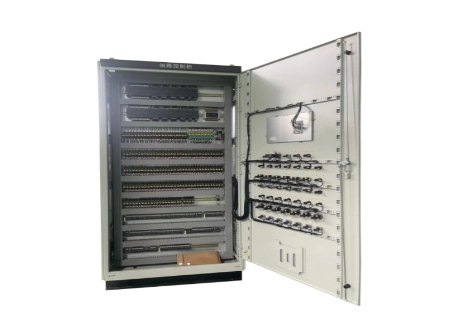
A control cabinet performs a different role. It manages machine operation, signals, protection, communication, and process logic. It may include PLCs, relays, drives, terminals, HMI equipment, and safety circuits.
For industrial power control, the supplier needs more than the cabinet dimensions. The buyer should provide:
- Machine operation sequence
- I/O list
- Motor list
- Control voltage
- Alarm requirements
- Communication protocol
- Emergency stop logic
- Installation environment
Without these details, the supplier may quote an enclosure with components but miss the real needs of the production line.
What Is Driving Demand for Custom Power Distribution?
Custom design is becoming more common because industrial projects are becoming less uniform. Data centers have higher rack density. Factories have more automation. Microgrids add new power sources. Owners also want equipment that can be expanded without replacing the entire system.
Data Centers Need More Than a Fixed Cabinet
AI data centers require high-capacity power distribution, stronger monitoring, and careful coordination between the facility and the rack. The electrical path may include the main switchboard, panelboards, STS equipment, PDU products, and rack-level monitoring.
Customers searching for custom switchboards for data centers may need:
- High-current incoming sections
- Special busbar layouts
- UPS or generator integration
- A/B power arrangements
- Additional metering
- Front-access maintenance
- Space for future feeders
- Coordination with rack PDU systems
Projects looking for custom data centre switchboards and control panels also need clear communication between the electrical contractor, equipment supplier, and facility operator. The layout should support installation, testing, and later maintenance.
Industrial Sites Need Control and Power in One Plan
A factory may have a large switchboard for main power, panelboards for branch circuits, control cabinets for machinery, and PDU systems for industrial IT equipment. These products should be planned as interconnected parts of a single power distribution system.
A good plan considers:
- Where power enters the facility
- How feeders are separated
- Which loads are critical
- Which circuits require monitoring
- How the control system responds to faults
- Where future loads may be added
- How maintenance staff will isolate equipment
This approach reduces the risk of buying separate products that work individually but do not fit together on site.
Does Every Project Need a Smart PDU?
Not every project needs advanced PDU functions. However, more industrial facilities now use server racks, automation computers, edge devices, testing systems, and security equipment. Local power monitoring can help teams find problems faster and plan capacity more carefully.
Match PDU Functions to the Operating Risk
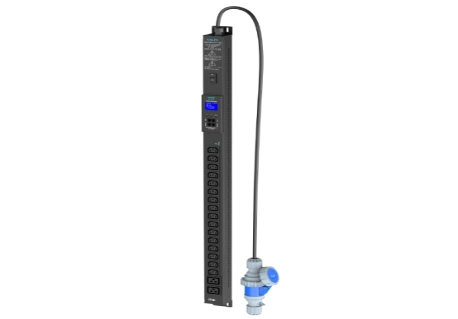
A basic PDU can support straightforward rack distribution. A metered PDU can provide local readings for voltage, current, power, and energy. A monitored or smart PDU can add remote alarms, environmental data, communication, and outlet-level control, depending on the model.
A buyer searching for a smart PDU manufacturer should ask:
- Is monitoring local or remote?
- Are alarms available?
- Can the unit track energy use?
- Does it support temperature or humidity sensors?
- Are C13 and C19 outlets available?
- Is 0U or horizontal installation required?
- Can the PDU be customized for the cabinet?
KAILES offers Basic PDU, Metered PDU, 受监控的PDU, Smart PDU, and High Power PDU options through our 产品中心. We can discuss outlet layout, input requirements, installation direction, current rating, and monitoring needs according to the project.
What Should Buyers Prepare Before Sending an RFQ?
Many procurement delays begin with an incomplete request. A supplier cannot accurately quote a switchboard, panelboard, control cabinet, or PDU if the project information is too general.
Send Technical Information Early
Before requesting a quotation, prepare as much of the following information as possible:
- Single-line diagram
- Load schedule
- Voltage and phase
- 额定电流
- Transformer information
- Available fault current
- SCCR requirement
- AIC requirements
- Cabinet dimensions
- Cable entry direction
- Access requirements
- Control logic
- PDU input and outlet requirements
- Communication functions
- Target delivery date
The SCCR rating label should also be reviewed against the drawings and project requirements. Buyers should not approve a cabinet based only on the label or the main breaker rating.
Evaluate the Supplier’s Project Support
A power distribution equipment factory should be able to discuss the design, not only send a price list. Before placing an order, buyers should ask whether the supplier can review drawings, support custom layouts, provide test documents, explain applicable standards, and manage changes after approval.
凯尔斯 售前服务 includes technical consultation, demand review, solution design, drawing support, and sample testing. These steps help customers confirm the design before production.
After delivery, technical support is still important. Our 售后服务 covers response, warranty, remote assistance, and maintenance support for long-term project operation.
结论
Industrial projects are moving beyond standard switchboards and control cabinets because their power systems are changing faster than traditional product categories. New factories, AI data centers, EV battery facilities, and microgrid projects need higher capacity, clearer protection ratings, more flexible layouts, and stronger communication between power and control systems. A switchboard, panelboard, control cabinet, and PDU should be planned as connected parts of one project. Buyers should prepare load data, fault current, drawings, cabinet dimensions, control logic, monitoring needs, and delivery targets before sending an RFQ. With early technical review and suitable customization, KAILES can help customers reduce design changes, approval delays, and installation problems.
常见问题解答
问: Why are standard switchboards less suitable for industrial expansion?
A: Industrial projects often need custom ratings, layouts, monitoring, and future expansion space.
问: What should buyers check before ordering a panelboard?
A: Check circuit count, voltage, fault current, AIC, enclosure, access, and spare capacity.
问: Can KAILES provide custom control cabinets and PDU systems?
A: Yes. KAILES supports custom control cabinets, PDU systems, switchboards, and panelboards.

