
AI servers are changing the power profile of modern facilities. High-density racks now place greater pressure on circuits, cooling systems, cable paths, and maintenance teams. A PDU that worked well for a small server room may no longer give operators enough information or control. The difficult question is not simply whether a rack can receive power. It is whether the power path can be measured, protected, maintained, and expanded without creating blind spots.
For buyers, this creates a practical decision: should a project use a Basic PDU, metered power, remote monitoring, intelligent control, or automatic transfer between sources? The right answer depends on rack load, operating risk, site standards, and the next stage of growth. This guide reviews the buying signals that matter most in data centers and industrial environments.
Why Are PDUs Becoming a Strategic Purchase?
Power distribution is now closely tied to uptime, energy reporting, and maintenance planning. In a growing facility, a PDU is not an isolated socket strip. It is part of the path between the upstream panel, the rack, and every connected device. If that path cannot show what is happening, a small load change can become a difficult troubleshooting event.
Recent industry discussion has centered on AI computing, rising rack density, and the need for better power data. These trends make the buying process more demanding. Procurement teams must compare not only outlet count and current rating, but also measurement depth, communications, protection, service support, and compatibility with the wider electrical design.
What are the current trends in intelligent power management?
Customers are asking for clearer power data at rack and outlet level, faster warnings, and a simpler way to connect electrical information with facility operations. They also want a product that can fit existing cabinets today and support higher loads tomorrow. In practice, the main trends are:
- More demand for real-time current, voltage, power, and energy readings.
- Greater interest in outlet-level visibility for high-density racks.
- Remote access through web interfaces, apps, or SNMP-based systems.
- Load alerts that help teams act before an overload becomes an outage.
- Modular planning for future rack expansion and changing equipment.
These needs explain why a smart PDU manufacturer must offer more than a standard enclosure. The product should provide reliable electrical performance and useful operational information.
Which PDU Functions Match Your Site Risk?
Every project does not need the most advanced PDU. A small cabinet with stable loads may benefit from a simple and dependable design. A critical data hall, test lab, or industrial control area may need detailed readings, remote action, and a second power source. Start with the operating risk, then match the functions to that risk.
Basic PDU for stable, known loads
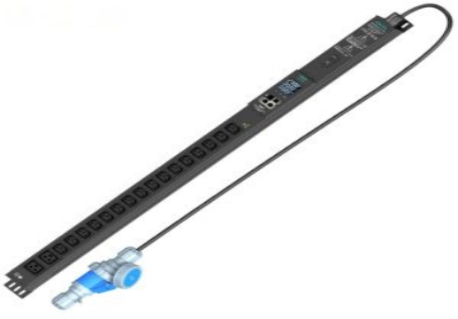
A Basic PDU is often suitable when the load is predictable, local inspection is easy, and the facility already has strong upstream protection. Buyers should still confirm the input plug, outlet type, current rating, mounting method, cable length, and overcurrent protection. It is a sensible choice for smaller racks, office equipment rooms, and industrial cabinets where remote measurement is not a daily requirement.
KAILES offers Basic PDU options with multiple outlet configurations and customizable socket types. Review the Basic PDU product range against the cabinet layout and the local electrical standard before placing an order.
Metered or monitored PDU for better decisions
Metered power becomes valuable when teams need to know how much capacity remains, how the load changes over time, or which circuit is approaching its limit. It supports more disciplined rack planning and helps reduce guesswork during maintenance. In a multi-cabinet room, shared data can also help managers compare demand across areas.
For buyers, the important detail is measurement scope. Ask whether readings are available at the inlet, phase, branch, or outlet level. Confirm the accuracy, display method, alarm settings, and communication options. A meter that cannot be read easily or connected to the site workflow may add cost without adding much control.
Smart PDU for high-density and remote operations
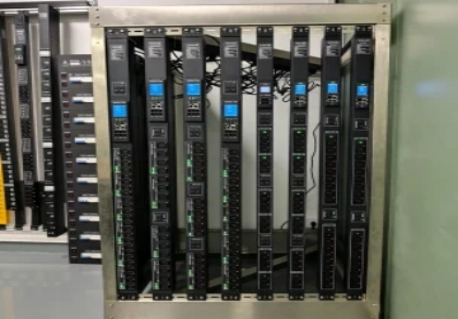
Smart PDU systems are more appropriate when the site has high-value equipment, limited staff, frequent load changes, or strict reporting needs. They can combine metering, remote monitoring, alarms, and control in one KAILES Smart PDU platform. For high-density racks, this helps teams identify an unusual load before it affects neighboring equipment or the wider power path.
KAILES Smart PDU solutions support monitoring of current, voltage, power, energy, and independent output ports, with remote access through web, app, or SNMP methods. See the Smart PDU specifications and confirm that the communication method fits your monitoring architecture.
What Should Buyers Check Before Comparing Suppliers?
Product names can look similar across supplier websites, yet the engineering details may differ. A reliable comparison uses the project conditions as the starting point. Share the rack drawing, expected load, input arrangement, socket plan, communication needs, and local certification requirements before asking for a quotation. This gives the supplier enough information to recommend a usable configuration.
Electrical fit and local standards
Check rated voltage, phase, current, frequency, short-circuit protection, plug and socket standards, and available installation space. If the project connects to low voltage switchboards in usa, the PDU should be reviewed as part of the complete distribution design rather than treated as a separate accessory. Certification documents, test records, and clear wiring information also matter when contractors prepare approval packages.
KAILES works across PDU and low-voltage distribution equipment, so we can discuss the relationship between rack-level distribution and upstream equipment. Our wider product center includes switchboards, panel boards, switchgear, control cabinets, Basic PDU, Smart PDU, and STS PDU solutions.
Capacity, heat, and future expansion
Do not size a PDU only for today’s server list. Consider start-up current, uneven phase loading, cooling changes, new accelerator cards, and the possibility of adding cabinets. High-density racks can make small errors more costly because a single rack may represent a large share of the room load.
A good specification should include spare capacity without creating an unnecessarily large and expensive system. Ask the supplier to explain the expected operating range, the alarm threshold, and the steps for adding future equipment. This is especially important for an industrial site where production changes may alter the electrical profile.
Service, testing, and project communication
A strong power distribution equipment factory should support the project before and after delivery. Buyers should ask who checks the drawings, who confirms the configuration, how samples are tested, and how technical questions are handled after installation. A supplier that only sends a price list may leave the customer to solve compatibility problems alone.
Our pre-sale service includes power system assessment, project-based selection support, drawing assistance, and product comparison. We can also support a rapid drawing process based on customer drawings or site data. After delivery, our 售后服务 provides technical consultation, warranty support, installation guidance, and fault analysis support.
When Does an STS PDU Make Sense?
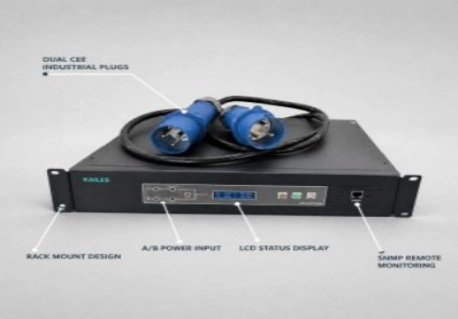
Some facilities cannot tolerate a single upstream power path. If equipment needs to move between two independent sources, an STS PDU may be considered. The decision should be based on the site’s power architecture, transfer requirements, equipment sensitivity, and maintenance plan.
STS is not a substitute for a complete electrical design. It should be reviewed with the upstream switchboard, branch circuits, backup sources, and rack equipment. Procurement teams should request transfer specifications, monitoring functions, installation requirements, and test procedures. KAILES provides STS PDU solutions for projects that need dual-power automatic switching at the rack level.
A Practical PDU Buying Checklist
Before approving a supplier, place the following information in one project sheet. This makes technical review faster and reduces changes after production begins.
- Rack count, cabinet height, and mounting position.
- Input voltage, phase, current, plug, and cable length.
- Outlet count, outlet type, spacing, and locking needs.
- Expected normal load, peak load, and future spare capacity.
- Need for metered power, outlet-level data, alarms, or remote control.
- SNMP, web, app, or other communication requirements.
- Upstream switchboard and panel board information.
- Required certifications, inspection documents, and test reports.
- Delivery schedule, sample testing, installation support, and warranty.
When the supplier receives these details early, the quotation becomes easier to compare. It also gives the engineering team a clearer view of the complete power chain.
结论
AI workloads and high-density racks are changing what buyers expect from a PDU. The right choice depends on more than outlet count. It requires a clear view of load, measurement, protection, communications, upstream distribution, and future expansion. Basic PDU products can serve stable and predictable applications, while metered, monitored, Smart, and STS solutions support higher visibility or higher availability needs. KAILES combines PDU manufacturing with low-voltage power distribution experience, engineering support, product testing, and after-sale service. By sharing project data early and comparing the complete power path, customers can select a PDU that supports reliable operation today and a more manageable power system tomorrow.
常见问题解答
Q: What is the main benefit of metered power in a PDU?
A: It shows load data for capacity planning, alerts, and energy review.
Q: When do high-density racks need a Smart PDU?
A: When operators need remote monitoring, detailed alarms, and faster load decisions.
Q: Can KAILES support industrial PDU projects?
A: Yes. We provide PDU selection, drawings, testing, customization, and after-sale support.

