
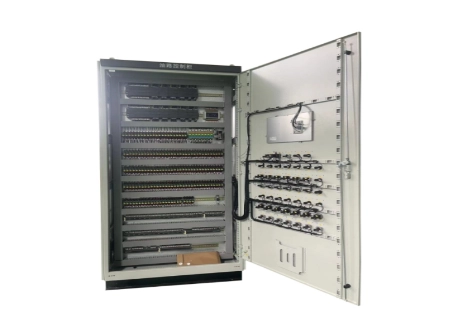
Standard electrical cabinets once worked well for many commercial and industrial projects. The load was easier to predict, production lines changed slowly, and most equipment could be selected from a fixed catalog.
That situation is changing.
AI data centers, EV battery factories, automated warehouses, microgrids, and expanded manufacturing plants now require more power, more monitoring, and more control. A cabinet that looks suitable during the first quotation may not fit the final project. It may have the wrong fault rating, too little space, limited feeder capacity, or no room for future expansion.
Recent energy outlooks show that data center electricity demand is growing rapidly, while U.S. industrial investment is also adding pressure to local power systems. For project owners and EPC teams, this means switchboard and panelboard planning must begin earlier. The decision cannot be based on price and current rating alone.
在 凯尔斯, we provide power distribution and control solutions for data centers, industrial automation, smart buildings, and new energy projects. Our product range includes switchboards, panelboards, control cabinets, PDU systems, STS dual power switchers, and intelligent power management equipment.
The Problem with One-Size-Fits-All Power Distribution
A standard cabinet is attractive because it appears simple. The product already exists, the price may be easy to compare, and the supplier can often provide a quick quotation. However, the same advantages can become limitations when the project has unusual electrical, mechanical, or control requirements.
Real Projects Rarely Stay Standard
A factory expansion may begin with one production line and later add several more. An AI data center may increase rack density after the first phase. An older industrial plant may need to work with existing transformers, cables, and room layouts.
These changes create requirements that a standard cabinet may not cover:
- Higher incoming current
- More feeder circuits
- Special cable entry
- Different breaker arrangements
- Additional metering
- Remote communication
- Extra maintenance space
- Spare capacity for future loads
- Integration with generators or microgrids
This is why buyers comparing low voltage switchboards in USA should review the entire project rather than select a cabinet from a short product list.
Current Rating Is Only the Beginning
A 2000A switchboard may sound powerful, but the number alone does not confirm that it will work on site. The buyer also needs to review voltage, phase, busbar design, short-circuit capacity, protective devices, cable space, heat dissipation, and access requirements.
The same issue applies to panelboards. The number of circuits, available fault current, breaker combination, enclosure location, and future spare ways can have a direct effect on project performance.
A higher rating does not always mean a better solution. An oversized cabinet may increase cost, take up valuable room, and make installation more difficult. The right design is the one that matches the actual power system.
Why AIC and SCCR Problems Appear Late
Short-circuit ratings are often checked during design review or inspection. By then, the cabinet may already be in production. If the rating information is incomplete, the buyer may face redesign, replacement components, or a delayed approval.
Do Not Rely on the AIC Rating Label Alone
The AIC rating label is important, but it should not be reviewed in isolation. AIC commonly refers to the interrupting capacity of a breaker or fuse. The complete switchboard or panelboard also has to match the available fault current and project requirements.
Before approving the equipment, buyers should confirm:
- Available fault current at the installation point
- Breaker interrupting rating
- Equipment SCCR
- Main and branch device arrangement
- Series-rated or fully rated design
- Voltage and system configuration
- Nameplate details
- Testing and inspection documents
The phrase standard AIC ratings for panelboards may appear in online searches, but there is no single rating that fits every project. The correct value depends on the site and the equipment configuration.
U.S. Compliance Requires Clear Equipment Boundaries
Switchboards, panelboards, and control cabinets may be installed in the same facility, but they are designed for different purposes. A main switchboard handles larger distribution. A panelboard normally serves branch circuits. A control cabinet manages machine operation, signals, and industrial power control.
The applicable standard should be confirmed before the RFQ is issued. The buyer should also check whether the supplier is quoting a complete listed assembly, a custom-built control panel, or a cabinet that still requires project-level review.
This distinction is especially important for customers who need equipment for the U.S. market. A general statement about certification is not enough. The selected configuration, components, markings, and project documents must match the actual application.
The New Demands of AI and Industrial Power Systems
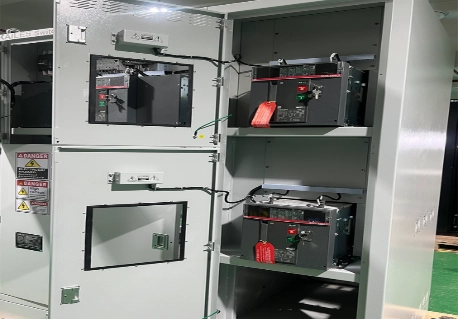
AI data centers are increasing the need for high-density electrical infrastructure. Industrial plants are also becoming more digital, with more servers, sensors, automation systems, chargers, and cooling equipment. The result is a power system that must distribute energy and provide useful information at the same time.
Switchboards Must Support Expansion
Large projects are rarely finished in one step. Owners may reserve space for new feeders, additional transformers, or larger cooling systems. A switchboard without expansion planning can force a major shutdown when the next phase begins.
For this reason, buyers should discuss:
- Future feeder positions
- Busbar capacity
- Main and tie breaker arrangements
- Spare cabinet sections
- Metering points
- Maintenance access
- Incoming and outgoing cable paths
- Integration with backup power
KAILES can review these points during the early design stage. We treat the switchboard as part of the facility power plan, not as an isolated metal enclosure.
Control Cabinets Need Process Information
A control cabinet cannot be designed correctly from dimensions alone. The supplier needs to understand what the cabinet will control and how the system should respond to faults, alarms, and operating changes.
For industrial power control, the buyer may need to provide:
- PLC or controller requirements
- I/O list
- Motor and drive list
- HMI requirements
- Alarm sequence
- Communication protocol
- Emergency stop logic
- Enclosure and installation conditions
This information is useful for production lines, pumps, HVAC systems, conveyors, battery equipment, and automated handling systems. Without it, a quotation may include hardware but fail to reflect the actual control task.
PDU Requirements Are Also Changing
PDU systems are now used beyond traditional server rooms. Factories may need them for automation servers, test racks, edge computing, security equipment, and industrial IT cabinets. These local power units must fit the rack, the input supply, and the equipment plug arrangement.
More Customers Need Smart Monitoring
A basic PDU may be suitable for simple distribution. A metered PDU can show voltage, current, power, and energy locally. A monitored or smart PDU can provide remote data, alarms, environmental monitoring, and outlet-level control, depending on the selected model.
Customers searching for a smart PDU manufacturer are often trying to solve a clear problem: they need to know what is happening inside the cabinet before an overload or temperature issue becomes an outage.
KAILES offers Basic PDU, Metered PDU, Monitored PDU, Smart PDU, and High Power PDU products. Our 产品中心 also covers switchboards, panelboards, control cabinets, and related power equipment.
Custom Data Center Projects Need More Than a Catalog
Customers may search for custom switchboards for data centers or custom data centre switchboards and control panels because standard equipment does not fit the room, load, or maintenance plan.
Typical requirements include:
- High-current incoming power
- Special busbar arrangements
- Front-access maintenance
- 顶部或底部电缆入口
- UPS or generator integration
- PDU coordination
- Remote monitoring
- Space for future expansion
- Special cabinet dimensions
The same applies to customers who are looking for power distribution unit manufacturers that can do custom builds for specific requirements. They are not simply asking for a product. They are asking whether the manufacturer can understand a project and turn its information into a workable design.
Supply Chain Pressure Makes Early Review More Important
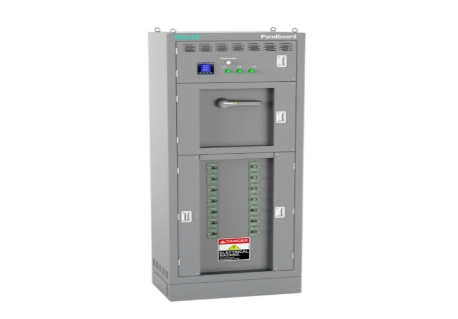
Electrical equipment is often connected to the project schedule. A delay in switchboards, panelboards, control cabinets, or PDU systems may delay cable installation, commissioning, and production startup.
Prepare the RFQ Before the Project Becomes Urgent
A useful RFQ should include:
- Single-line diagram
- Load schedule
- Voltage and current
- Available fault current
- Required SCCR
- Breaker arrangement
- Cabinet dimensions
- Cable entry direction
- Control logic
- PDU requirements
- Communication functions
- Installation environment
- Target delivery date
凯尔斯 售前服务 supports technical consultation, demand review, solution planning, drawing support, and sample testing. Early communication gives both sides time to check ratings, layout, materials, and special components.
Service Should Continue After Delivery
Power distribution equipment is a long-term asset. The buyer may later need installation guidance, troubleshooting, replacement parts, or help with system expansion.
我们的 售后服务 provides technical response, warranty support, remote assistance, and maintenance help. This matters when the equipment is connected to a running factory or a critical data center.
结论
Standard switchboards and panelboards still have a place in simple projects, but modern industrial facilities often need more flexibility. AI data centers, EV battery plants, automated factories, and microgrid sites are adding larger loads, more control functions, and stricter documentation requirements. A 2000A switchboard must match the complete electrical system, while a panelboard needs the right AIC, circuit capacity, and expansion space. Control cabinets require real process information, and PDU systems increasingly need monitoring and custom configuration. For project owners and EPC teams, early technical communication can reduce redesign, inspection problems, and delivery delays. At KAILES, we support customers with coordinated power distribution and control solutions built around actual project conditions.
常见问题解答
问: Why are standard switchboards not enough for modern factories?
A: Modern factories often need higher capacity, custom layouts, monitoring, and future expansion space.
问: What should I check on an AIC rating label?
A: Check voltage, breaker AIC, equipment SCCR, and available fault current.
问: Can KAILES provide custom switchboards and control panels?
A: Yes. KAILES supports project-based switchboard, panelboard, control cabinet, and PDU configurations.

