
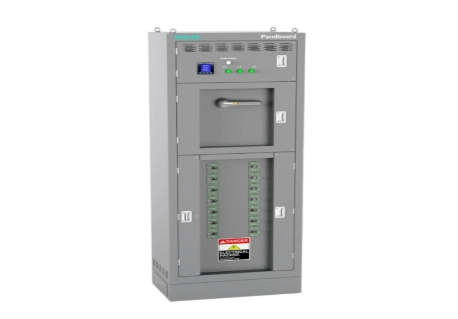
AI data centers are changing the way electrical teams buy power distribution equipment. A few years ago, many buyers focused mainly on price, cabinet size, and delivery time. Today, those points still matter, but they are not enough. Higher rack power, larger transformers, backup systems, liquid cooling, and faster project schedules all place more pressure onto the low-voltage main switchboard.
For owners, EPC teams, facility engineers, and procurement managers, the real question is no longer “Which cabinet looks suitable?” It is “Can this switchboard carry the load, pass review, support future expansion, and work with the full power chain from incoming service to rack-level PDU?”
This is why low-voltage main switchboard selection has become a serious buying decision. Reports from Gartner show strong growth in data center electricity use in 2026, while the IEA notes that AI is raising power density and making energy planning more complex. In this environment, choosing the right switchboard early can help avoid redesign, approval delays, and costly field changes.
在 凯尔斯, we work with power distribution projects where load capacity, standards, customization, and service support all matter. Our 产品中心 includes switchboards, panelboards, control cabinets, PDU products, STS dual power switchers, and other power distribution solutions.
Start with the Project Load, Not the Cabinet Size
Many buyers start by asking for cabinet dimensions or a current rating. That is normal, but it should not be the first step. A switchboard is part of a power system. Its rating, structure, protection, and layout must align with the real project load, the utility supply, the transformer, the downstream equipment, and the installation space.
Check the Present Load and the Growth Plan
A data center, factory, or commercial building may not use full capacity on day one. Still, the main switchboard must be selected with growth in mind. AI server rooms can expand quickly. Manufacturing lines may add new machines. EV battery plants, cold storage buildings, and smart factories often shift in power demand after commissioning.
Before asking for a quotation, buyers should prepare:
- Total connected load
- Expected running load
- Future load reserve
- Voltage and phase system
- Transformer size and impedance
- Main incoming current
- Number of feeders
- UPS, generator, or microgrid connection
- Metering and communication requirements
A 2000A switchboard may be suitable for some medium-to-large projects, but the number alone does not answer everything. The design must also consider thermal performance, busbar cross-section, short-circuit rating, breaker arrangement, cable entry, and maintenance clearances.
Link the Main Switchboard to Downstream Equipment
The main switchboard does not work alone. It feeds panelboards, control cabinets, PDUs, cooling systems, UPS lines, and other electrical equipment. If the upstream and downstream parts are planned separately, the project may face mismatched breaker sizes, unclear protective-device coordination, or poor cable routing.
For AI data centers, the connection from main distribution to rack power is especially important. The path may include the main switchboard, distribution panels, STS systems, and rack-level PDU units. If any part is undersized, the full chain becomes weaker.
Match the Standard to the Market
For U.S. projects, standards and labels are not small details. They affect design review, installation approval, and customer confidence. Buyers should avoid using one broad word such as “distribution cabinet” and instead define the equipment type clearly.
UL 891, UL 67, and UL 508A Have Different Roles
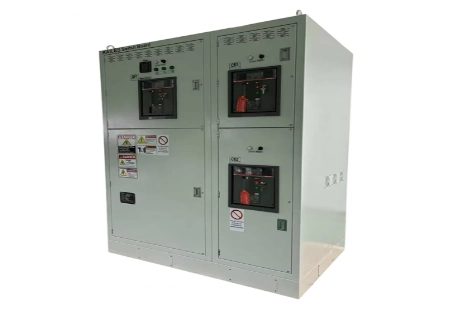
A low-voltage main switchboard for U.S. projects is often linked with UL 891. A panelboard is usually discussed under UL 67. An industrial control cabinet may fall under UL 508A when it is built for industrial control functions. These standards serve different equipment types, so the buyer should not treat them as interchangeable.
UL states that UL 891 applies to switchboards rated 1000V or less and covers dead-front switchboards. UL also explains that UL 67 is the basic standard used for panelboards. For control panels, UL resources describe UL 508A as the standard for industrial control panels.
This matters during procurement. If a project needs a main distribution switchboard, asking for a panelboard may lead to the wrong product. If the project needs an industrial control panel, a switchboard quote may miss PLC, HMI, control logic, and machine interface needs.
Ask for the Right Documents Early
U.S. customers often worry whether overseas-made equipment can meet project requirements. The best way to reduce that concern is not with general claims. It is with clear documents.
Before approval, buyers should ask for:
- One-line diagram review
- General arrangement drawing
- Electrical schematic
- Bill of materials
- Rated current and voltage
- SCCR or short-circuit rating
- Enclosure rating
- Cable entry direction
- Nameplate details
- Test and inspection records
- Applicable standard statement
KAILES switchboard products are shown with UL 891 / CSA C22.2 No.244 references, multiple current ratings, and SCCR options on our 总机 page. We can discuss project needs based on drawings, standards, voltage, current, environment, and delivery requirements.
Choose Between Standard and Custom Builds
A standard configuration can work well when the project is simple. But many current projects are not simple. AI data centers, industrial parks, automated factories, and energy projects often need special cabinet dimensions, cable entry, breaker layout, monitoring, or communication functions.
When a Standard Switchboard Is Enough
A standard switchboard may fit when the electrical room is conventional, the load is stable, the feeder arrangement is simple, and the site has enough space. It is often faster to quote and easier to compare.
Standard choices can work well for:
- General commercial buildings
- Smaller industrial power rooms
- Projects with typical feeder layouts
- Sites without special communication needs
- Projects with simple front-access maintenance
Even then, buyers should still confirm SCCR, working space, heat rise, enclosure type, and installation method.
When Custom Design Becomes Necessary
Custom design becomes important when the site has limits or the power system has special goals. A buyer may need top cable entry because the trench is not available. Another project may need front access only because the cabinet stands against a wall. A factory may need industrial power control functions connected with PLC and HMI systems.
Custom work may be needed for:
- 2000A switchboard or higher current distribution
- Tight electrical rooms
- 顶部或底部电缆入口
- Copper busbar preference
- Smart meters and Modbus communication
- NEMA 1, NEMA 3R, or stronger enclosure needs
- Future bay expansion
- UPS or generator connection
- Integrated control cabinet functions
- Special PDU and downstream rack power planning
Some buyers search online using long phrases such as looking for power distribution unit manufacturers that can do custom builds for specific requirements. That search intent is clear: they do not only want a catalog item. They want a manufacturer that can interpret project specifications, discuss the limits, and build around real conditions.
Review Installation and Maintenance Before Ordering
A switchboard may look correct on a drawing but still cause problems on site. Installation space, access direction, cable bending, door swing, and thermal dissipation can all affect project success. These points should be reviewed before production, not during commissioning.
Space and Access Can Change the Design
Electrical rooms often have strict space limits. A front-and-rear access switchboard needs rear working clearance. A front-access design may save space, but the internal layout must allow safe operation and maintenance. If the switchboard is large, access paths and working space become even more important.
Buyers should confirm:
- Room size
- Front and rear clearance
- Door opening direction
- Ceiling height
- Cable tray or trench position
- Lifting and moving path
- Ventilation condition
- Indoor or outdoor location
- Maintenance access after installation
These checks are practical. They reduce site changes and help the installer work faster.
Monitoring and Communication Add Long-Term Value
Power distribution is becoming more digital. Many data centers and industrial sites want power meters, harmonic analysis, communication ports, and remote viewing. This helps maintenance teams see load changes, detect abnormal current, and plan future capacity.
A switchboard with monitoring can help answer simple but important questions:
- Which feeder is close to its limit?
- Is the load balanced across phases?
- Has demand grown since startup?
- Is a cooling or production line adding hidden load?
- Will the next expansion require a larger feeder?
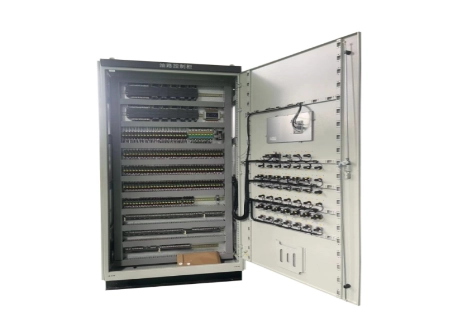
For industrial power control projects, this visibility can also support production stability. A control cabinet may combine PLC, variable-frequency drives, HMI, and fault feedback. When this information is planned with the main distribution system, the site becomes easier to manage.
Prepare a Better RFQ for Faster Quotation
A strong RFQ helps the supplier reply faster and more accurately. It also helps the buyer compare options fairly. If the request only says “need low-voltage cabinet,” the supplier must guess. That can lead to missing details, weak pricing, and repeated revisions.
What Buyers Should Include
Before sending the RFQ, prepare these items if available:
- Single-line diagram
- Load schedule
- Rated voltage
- Rated current, such as 2000A
- 频率
- Phase and wire system
- Available fault current
- Required SCCR
- Incoming and outgoing feeder list
- Breaker requirements
- Enclosure type
- Cable entry direction
- Access requirement
- Metering and communication needs
- Applicable standards
- Target delivery time
- Site photos or room drawings
凯尔斯 售前服务 supports technical consultation, requirement analysis, solution design, and drawing response based on customer drawings or site information. This helps buyers turn early project data into a clearer technical proposal.
What to Check After Receiving a Proposal
After receiving the proposal, do not only compare price. Check whether the supplier answered the project risk points.
Review these details:
- Does the current rating match the load?
- Does the cabinet allow future expansion?
- Are SCCR and voltage clearly shown?
- Are cable entry and access direction correct?
- Are monitoring functions listed clearly?
- Are drawings complete enough for approval?
- Are standards stated correctly?
- Is the lead time realistic?
- Is after-sale support available?
我们的 售后服务 covers response, warranty, remote support, maintenance options, and technical help after delivery. For buyers managing long-life electrical assets, service support matters almost as much as the first purchase.
结论
A low-voltage main switchboard should be chosen from the project outward: load, standard, short-circuit rating, space, downstream equipment, monitoring, and future expansion. This is especially true for AI data centers and industrial projects where power demand grows quickly and mistakes are costly. A 2000A switchboard may be the right answer for one project and the wrong answer for another if the site data is incomplete. Buyers should prepare the single-line diagram, load schedule, voltage, current, SCCR, cabinet space, and delivery needs before RFQ. At KAILES, we help customers review these details and match switchboards, panelboards, control cabinets, PDU products, and related power solutions to real project conditions.
常见问题解答
问: What is a low–voltage main switchboard used for?
A: It distributes main power to panelboards, control cabinets, PDU units, and large electrical loads.
问: Is a 2000A switchboard suitable for AI data centers?
A: Yes, if load, SCCR, cooling, and expansion needs match the project.
问: Can KAILES support custom switchboard builds?
A: Yes, KAILES supports custom design based on drawings, load data, and site requirements.

