
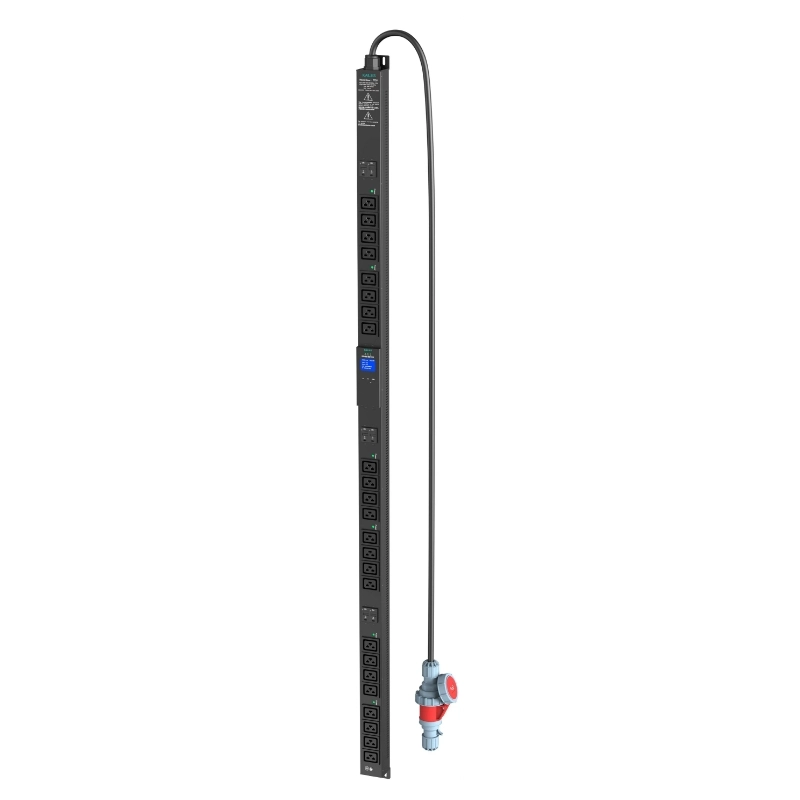
AI data centers continue to change the way teams plan and handle power needs. One rack that used to support ordinary servers can now run GPU servers, storage devices, cooling control units, and network equipment all at once. These units often pull heavy loads while handling AI training, inference, and real-time data processing.
In such conditions, a basic rack power strip falls short. Data center teams require clear visibility at the rack level before any power issue leads to downtime. This need explains why the smart PDU has grown even more important by 2026. The device goes beyond simple power distribution. It measures usage, delivers reports, issues warnings, and gives operators improved control over power resources.
Why AI Data Centers Need Better Power Monitoring
AI workloads rarely stay steady. Power demand can increase sharply when large models run. At other moments, the same rack may draw far lower power. These shifts make accurate planning more difficult. A cabinet may appear safe in a routine inspection yet approach its limit during peak operation.
AI Loads Can Change Quickly
AI servers frequently produce sudden shifts in rack power demand. Without proper monitoring, teams often discover issues only after a breaker trips, a cable overheats, or equipment shuts down. A smart PDU turns these hidden patterns into clear, actionable information.
It displays current, voltage, power, energy use, and load status. Engineers can then assess the true operating condition of the cabinet rather than depend solely on estimated figures. For high-density AI racks, such detailed insight holds special value.
High-Density Cabinets Have Less Safety Margin
Modern AI data centers commonly adopt high-density cabinets to increase computing capacity within tight spaces. More equipment, greater heat, and additional cables now fit inside a single rack. Even a minor imbalance can develop into a major concern.
A smart managed PDU allows teams to observe these cabinets with greater attention. Rather than monitor only the main power path, operators can examine behavior close to the device level. This approach provides extra time to identify unusual loads and respond before any failure occurs.
What a Smart PDU Does Inside the Rack
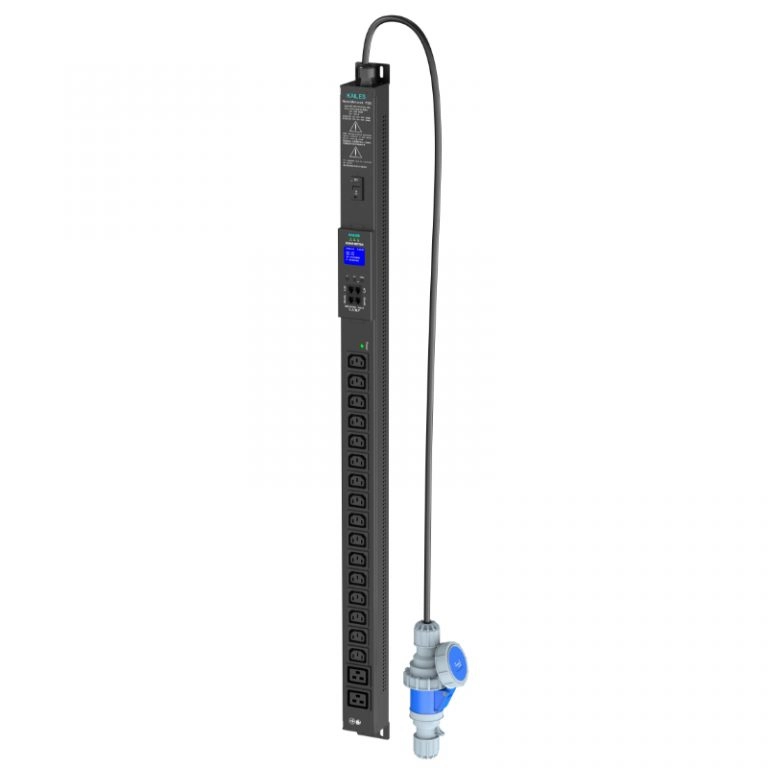
A smart PDU serves as a key monitoring and control point inside the cabinet. It supports everyday operations, rapid fault response, and future power planning. In AI data centers, this function gains importance as rack power density keeps rising.
Real-Time Power Data
The primary benefit of an smart PDU lies in its visibility. It tracks essential electrical data including:
- Current
- Voltage
- Active power
- Energy use
- Load level
- Circuit status
- Outlet status, depending on product design
This data enables teams to spot irregular power patterns at an early stage. For instance, if one device begins to draw more current than usual, engineers can examine the server, workload, or cooling setup before the entire rack suffers any impact.
Remote Viewing and Control
Many data center teams now oversee multiple locations simultaneously. Some operations include central data halls, edge rooms, and branch equipment rooms.
Through Web, APP, SNMP, or similar access methods, a smart PDU lets teams review power data from a distance. Certain models also allow outlet-level switching. This feature can restart an individual device without powering down the complete cabinet.
At KAILES, our products are designed to support safer and clearer power distribution for data centers, industrial automation, smart buildings, and other high-reliability environments. Our PDU range covers basic power distribution as well as advanced smart power management.
How Power Monitoring Reduces Downtime Risk
img.metered rack PDU power.webp
Downtime inside an AI data center can halt model training, slow cloud services, and add to maintenance demands. Power monitoring cannot eliminate every risk. However, it enables teams to detect many issues at an earlier point.
Early Warning Before Overload
Overload conditions often develop gradually. A team may install additional servers, expand GPU usage, or add new storage units. Each step may appear minor, yet the combined effect raises overall rack load.
A monitored PDU or smart PDU can alert the team once current or power approaches a defined threshold. Personnel can then redistribute loads, inspect cables, revise cabinet layouts, or lower short-term demand. The advantage is straightforward: operators receive advance notice before any power interruption takes place.
Faster Fault Location
When a rack experiences power loss, engineers must determine the exact origin of the fault. Did the problem begin with the upstream supply, the PDU, a single device, or a loose connection? In the absence of rack-level data, diagnosis requires more time.
A smart PDU supplies event records, alarm history, and live readings. These elements allow teams to locate the issue more rapidly and carry out maintenance with greater precision.
Smart PDU, Metered PDU, or Monitored PDU?
Not every project calls for the same PDU type. The correct selection depends on rack power density, management requirements, available budget, and the potential cost of downtime. Buyers should avoid deciding based only on outlet count or price.
Metered PDU
A metered PDU works well when local power readings suffice and full remote control is unnecessary. It suits smaller server rooms, network cabinets, or lower-risk IT areas.
It is suitable when:
- Rack load is moderate
- On-site checking is easy
- Remote alerts are not needed
- Budget is limited
- The site does not change often
Monitored PDU
A monitored PDU performs better when remote visibility is essential. It enables operators to check rack power data without opening the cabinet or traveling to the site. The solution fits larger data centers, multi-site facilities, and locations with fewer on-site technicians.
Smart PDU
A smart PDU frequently represents the preferred option for AI data centers, GPU racks, cloud platforms, and high-value IT rooms. These settings demand visibility, control, alarms, and trend information.
KAILES provides Smart PDU for high-availability power management. Our smart PDU solutions are designed for projects where power data, safety, and remote management all matter.
Key Features Buyers Should Check
A smart PDU must align with the electrical system and the actual rack conditions. A unit that appears appropriate in specifications may still prove unsuitable if voltage, current, plug type, outlet mix, or communication protocol does not match.
Power Rating and Capacity
Buyers should begin by verifying voltage, current, phase type, plug standard, outlet type, and total power capacity. AI racks equipped with GPU servers may require a high power PDU to handle heavy loads in a safe manner.
Important points include:
- Input voltage
- Rated current
- Single-phase or three-phase supply
- Outlet type and quantity
- Cable size
- Breaker design
- Installation method
- Certification needs
Outlet-Level Monitoring
Outlet-level data allows teams to observe which device consumes more power. This capability supports improved load balancing and simplified fault analysis. Outlet-level switching can also restart a single device without affecting the entire rack.
Communication and Alarms
A smart PDU should integrate smoothly with the data center management system. Buyers need to confirm support for Web access, APP access, SNMP, event logs, and alarm notifications. Effective communication ensures that power data contributes directly to daily operations.
Why Service Support Matters
A smart PDU forms one part of a broader power infrastructure. It must operate effectively alongside upstream distribution, rack layout, cooling systems, cabling, and monitoring platforms.
KAILES offers pre-sale service for power system assessment, technical consultation, solution design, and customized selection advice. We assist customers in matching the PDU to the actual power environment instead of selecting solely by model name.
Following delivery, installation guidance and technical support remain equally significant. KAILES provides after-sale service that includes response support, warranty service, remote consultation, spare parts support, and maintenance guidance. Our objective is to help customers maintain stable power distribution over extended periods of use.
Conclusion
AI data centers require power systems that deliver visibility, stability, and straightforward management. A smart PDU assists teams in tracking rack-level power, lowering overload risks, responding more quickly to faults, and planning future capacity with greater assurance. When compared with a basic rack PDU, it offers operators stronger control over high-density cabinets and essential AI equipment. For purchasers, the appropriate selection rests on load levels, monitoring requirements, remote access, safety features, and supplier support. KAILES supplies PDU products and service support for data centers, industrial automation, smart buildings, and high-reliability power environments.
FAQs
Q: What is a smart PDU for AI data centers?
A: A smart PDU monitors rack power and supports remote power management.
Q: Why is power monitoring important in 2026?
A: It helps prevent overload, downtime, and hidden energy waste.
Q: Is a high power PDU needed for GPU servers?
A: Yes, high-density GPU racks often need higher safe power capacity.

