
Factory expansion is moving quickly in the United States. New production lines, EV battery facilities, warehouse automation, microgrid projects, and older plants with heavier electrical loads all need stronger power distribution. For owners, EPC teams, and procurement managers, the buying question is practical: which equipment should be ordered now, and what details must be checked before the RFQ goes out?
A power room may include a main switchboard, panelboards, control cabinets, transfer equipment, and rack-level PDU products. Each item has a different job. If the buyer treats them as one general cabinet, the project can run into wrong ratings, missing drawings, tight installation space, long lead times, or approval delays.
At KAILES, we build low-voltage power distribution products for data centers, industrial automation, smart buildings, and new energy sites. Our Product portfolio includes switchboards, panelboards, control cabinets, PDU series, STS dual power switchers, and related power solutions.
Start with the Factory Growth Plan
A factory power project should begin with the load plan, not the cabinet name. In many new plants, the first phase is only part of the final electrical demand. The owner may add production lines, chargers, compressors, cooling systems, robots, or test benches after the first year. A cabinet that only fits day-one demand can become a bottleneck soon.
Map the Main Loads Before Asking for a Quote
Before choosing a switchboard or panelboard, the buyer should list the equipment that will draw power. This does not need to be perfect at the first meeting, but it should be clear enough for the supplier to understand the project scale. A 2000A switchboard, for example, may be a good fit for one facility and too small for another.
Useful inputs include:
- Main service voltage and phase
- Transformer size and impedance
- Total connected load
- Expected running load
- Motor and drive loads
- EV charging or battery equipment
- HVAC and process cooling loads
- Backup generator or microgrid connection
- Future expansion reserve
These items help the engineering team judge current rating, short-circuit rating, feeder arrangement, and busbar structure. They also reduce quotation changes later.
Connect Main Distribution to Local Power Needs
The main switchboard is only the first layer. A factory also needs panelboards for branch circuits, control cabinets for machines and process logic, and PDU products where power must be distributed to IT racks, test equipment, or modular systems. If these parts are planned separately, the site may face cable routing problems or uneven load across feeders.
Good planning connects the chain from service entrance to final equipment. It also makes maintenance easier. When a line stops, the team should know whether the issue is in the main distribution, the control circuit, the feeder, or the local power unit.
Match Equipment Type to the Job
Many buyers search for a switchboard, panelboard, control cabinet, or PDU because those words appear in drawings or supplier proposals. The safer method is to match each product to the actual job in the facility. A main distribution cabinet, a terminal distribution panel, and an industrial control panel are not the same thing.
Switchboard for Main Distribution
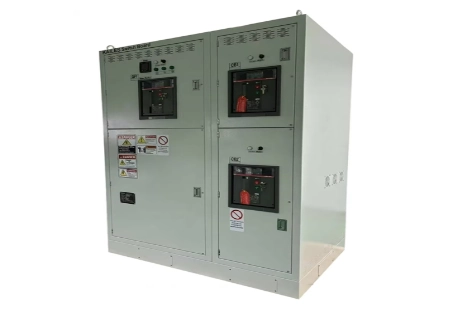
A switchboard is often used where larger power must be received and distributed. It may include a main breaker, feeder breakers, metering, busbars, and space for future feeders. In a new factory or large retrofit, this is often the equipment that sits near the incoming supply or transformer.
Buyers should check rated current, voltage, short-circuit rating, main and feeder breaker layout, cable entry direction, enclosure type, and access method. For U.S. projects, the applicable standard and project specification should be confirmed early. Do not assume one general cabinet can replace another product category.
Panelboard and Control Cabinet for Downstream Work
Panelboards are used where power needs to be divided into smaller branch circuits. They are common in production areas, lighting systems, equipment rooms, and commercial spaces attached to industrial buildings. Circuit count, voltage, available fault current, and enclosure location all matter.
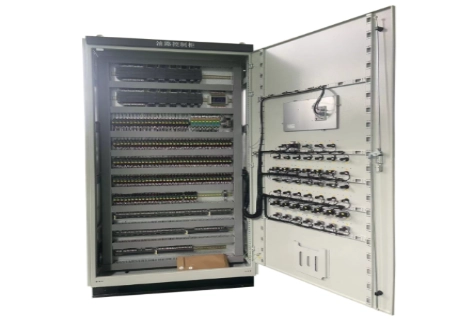
A control cabinet is different. It is about command, protection, and logic. It may include PLCs, relays, drives, terminals, HMI devices, and control wiring. In a factory expansion, industrial power control is often tied to pumps, conveyors, packaging machines, HVAC systems, and production lines.
Add PDU Planning Where Local Distribution Matters
PDU products are not only for large data centers. In modern factories, they can support industrial IT racks, automation servers, testing benches, security systems, edge computing cabinets, and smaller data rooms. As manufacturing becomes more digital, local power visibility becomes more useful.
Choose the PDU Level by Risk and Visibility
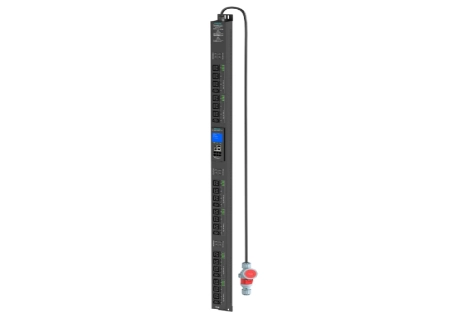
A basic PDU may be enough when the job is simple power distribution. A metered PDU helps staff read current, voltage, power, and energy at the cabinet. A monitored or smart PDU can support remote data, alarms, environmental sensors, and network communication.
KAILES PDU products cover Basic PDU, Metered PDU, Monitored PDU, Smart PDU, and High Power PDU options. Some PDU configurations include C13 and C19 outlets, 0U mounting, metal housings, circuit breaker protection, and operating temperature ranges from -10°C to +60°C.
Custom Builds Help When Standard Products Do Not Fit
Many buyers are looking for power distribution unit manufacturers that can do custom builds for specific requirements. That search often comes from real site limits: unusual input plugs, mixed outlet types, special cable direction, enclosure color, vertical mounting, high-density rack power, or monitoring requirements.
For these cases, the buyer should send device lists, cabinet drawings, inlet and outlet preferences, expected current, and communication needs. A custom PDU should solve an installation problem, not create a new one.
Avoid the Procurement Mistakes That Delay Startup
Power distribution mistakes are expensive because they are usually found late. By the time the equipment reaches the site, the electrical room may already be built and the cable trays may already be installed. A missing detail can delay a startup date.
Do Not Buy Only by Amperage
Current rating is important, but it is only one part of the decision. A 2000A switchboard still needs the right voltage, SCCR, breaker layout, enclosure, access direction, busbar material, cable space, and heat design. A panelboard also needs the right circuit count and fault rating. A PDU needs the right input, outlets, mounting, and protection.
A better RFQ should include:
- Single-line diagram
- Load schedule
- Voltage and phase
- Required current rating
- Available fault current
- SCCR requirement
- Standards and market requirements
- Cabinet dimensions or room drawings
- Cable entry direction
- Monitoring and communication needs
- Target delivery date
KAILES Pre-sale Service can support technical consultation, demand diagnosis, solution design, and drawing response. This is useful when the buyer has early project data but needs help turning it into a workable equipment list.
Do Not Leave Lead Time Until the End
Factory expansion projects are tied to production deadlines. If the switchboard, panelboard, control cabinet, or PDU arrives late, the schedule may slip. Buyers should ask about drawing approval time, material availability, production time, testing, packing, and shipping.
Supply chain pressure is one reason many U.S. buyers now contact manufacturers earlier. Early technical review gives the supplier time to check ratings, drawings, and special parts before the project becomes urgent. Recent energy-demand reports also show why power planning is becoming more important for industrial and digital infrastructure.
Build a Supplier Shortlist Around Project Support
Price matters, but it should not be the only filter. For factory expansion and retrofit work, a stronger supplier is one that can read the project, ask the right questions, prepare drawings, support changes, and provide after-sale help.
Before choosing a supplier, ask whether the team can review the single-line diagram, support custom switchboard or PDU requirements, provide test documents, explain standards, handle changes after drawing approval, and respond quickly to technical questions.
At KAILES, we focus on practical project support as well as product manufacturing. Our After-sale Service covers response, warranty, remote support, and maintenance help, so customers are not left alone after delivery.
Conclusion
- factory expansion projects need power distribution equipment that fits the real site, not just a simple product name. Buyers should start with the load plan, choose the right role for each switchboard, panelboard, control cabinet, and PDU, then confirm ratings, standards, space, drawings, and lead time before placing an order. A 2000A switchboard may be part of the answer, but it must match the power system around it. For plants adding automation, EV battery lines, microgrids, or industrial IT, custom power distribution can reduce late changes and help the project move with fewer surprises.
FAQs
Q: What is the best PDU for factory expansion?
A: A monitored or smart PDU works well when load visibility and alarms are needed.
Q: When should I choose a 2000A switchboard?
A: Choose it when load study, voltage, SCCR, and feeder needs match 2000A.
Q: Can KAILES support custom industrial power control projects?
A: Yes. KAILES can discuss control cabinets, PDU products, switchboards, and project drawings.

